

- Introduction
- Identifying Essential vs. Excessive Backstory: The Iceberg Principle
- Strategic Timing: When and How to Reveal the Past
- Writing Exercise: The Backstory Pull
- Conclusion
- Additional Resources
Introduction
Anthony stands at his front door with his hand resting on the knob, a tremor overtaking his body. Fifteen years ago, he’d left home without knowing what he was leaving behind, and he wasn’t sure if he could really come back.
This opening sentence combines present action with a past mystery that demands revelation. It hints at the emotional weight behind Anthony’s hesitation, suggesting a backstory that may unfold gradually, or hit us in the very next paragraph.

Backstory is a powerful way to lift your story off the flat page and into the round world you’ve created. While it’s often treated as character homework, backstory is also a critical narrative tool that makes books memorable. It’s essential, but tricky, to implement naturally, without falling into the dreaded info-dump.
In this guide, we’ll explore how to distinguish essential backstory from excess. We’ll look at cues that signal when backstory is needed to smooth transitions between past and present. Finally, we’ll offer strategies for weaving it in effectively, and pitfalls to avoid.
Identifying Essential vs. Excessive Backstory: The Iceberg Principle
While authors can go down the rabbit hole with their character’s backstories, or world’s histories, the reader doesn’t need all of that information. Backstory is there to give your readers critical knowledge to be aware of in the moment, or in the future, or to maintain suspense. The versatile tool means that the better you implement it, the better the story flows. There’s a few concepts that can help you identify essential versus excessive backstory.
The 90/10 Rule
The 90/10 rule, also known as the Iceberg principle, focuses on the concept that 90 percent of the backstory is hidden, while the reader glimpses only 10% of the backstory. I like thinking of this as if there’s a story within a story, and we only reveal the highlights. In reality, most of who you are is revealed to people in the same way. What information you give someone will vary based on situation, and besides those closest to you, most people only know about 10% of who you are. So, how do you apply the 90/10 rule?

You’ll want to focus on the information that directly impacts the current story’s stakes, conflicts, and character decisions. In the television show Greek Casey Cartwright doesn’t reveal that she has a little brother until he arrives at college. This wasn’t important to her until he could start impacting her life and goals. Especially once he starts trying to join a fraternity. But how do you know when to bring up this information?
The Relevance Test
Think of backstory like a conversation with someone you’ve just met. You want to share just enough to be intriguing, but it needs to come up naturally. Imagine meeting someone who, within five minutes, launches into how the gym became their church and the weights their trials. You started with a polite ‘Hi, how are you?’, just following social norms, but they took it as a cue to tell you that you could stand to gain a few pounds of muscle. That’s what an info-dump feels like. Even if readers have agreed to enter your story, they want to ease into it, get to know the world and the characters a bit before diving into their entire life history.
The relevance test explores whether the information is needed, how it affects the story, and how does it affect your readers. What you’re looking for in good backstory is:
- Does it explain current behavior?
- Does it raise or answer story questions?
- Does it affect the character’s goals or obstacles?
If the answer is no to all of these, it’s probably best left in your notes.
You might be able to use it later for marketing or bonus content, but your readers likely don’t need to know that your character only wears purple underwear on the third Thursday of May and September because of a horoscope they once read in a newspaper.
Quality Over Quantity
When it comes to backstory, quality beats quantity. There’s the kind of backstory that adds depth, and then there’s the kind that adds bulk. We’ve touched on this before when discussing info dumps and excessive exposition. The goal of backstory is to highlight key details and events from the past without writing an entirely separate story inside your story. Save that for the bonus content you’ll share with readers after your book release.
One well-chosen detail from the past can reveal more about a character than their entire chronological history.
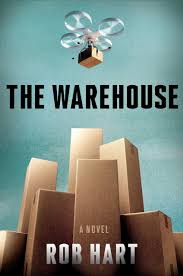
Take The Warehouse by Rob Hart. We learn about Zinnia through carefully placed details that shape our perception of her. Right from the beginning, her knowledge of the entrance interview process signals that she’s more aware, and more prepared, than the average applicant. As the story unfolds, we get glimpses of her true employer and motivations, but it’s all trickled in, not dumped. The result is a character who feels layered and intriguing, without ever needing a full biography.
Common Backstory Mistakes
There are some common mistakes seen in backstory, but in the interest of post length, I’ll just give a brief overview. Down the line I’ll add a full dive post into the common mistakes of different topics, including this one.
| Mistake | What It Looks Like | Why It’s a Problem | How to Fix It |
|---|---|---|---|
| Info-Dumping | Large blocks of backstory delivered all at once, often in narration or dialogue. | Overwhelms the reader and disrupts story momentum. | Weave in backstory gradually through action, dialogue, and character choices. |
| Origin Story Syndrome | Starting the story at the character’s birth or childhood, even when it’s not relevant. | Delays the actual plot and can bore readers before the story begins. | Start as close to the main conflict as possible; reveal relevant past as needed. |
| Writer-Only Backstory | Details that are interesting to the writer but irrelevant to the plot or character arc. | Adds unnecessary bulk and distracts from the story’s focus. | Use the “relevance test”: Does it affect behavior, goals, or story questions? |
Strategic Timing: When and How to Reveal the Past
So we’ve talked about what to do, and what not to do, but how do we implement backstory effectively?
The Motivation Principle
Backstory belongs on the page when it becomes emotionally or narratively necessary. The motivation principle is all about why the backstory surfaces in the first place, what pulls it into the light.
Let’s go back to the bro in the earlier example, randomly launching into his life story at the gym. In that case, the motivation is completely internal. No one asked, no cue was given, and because of that, the listener has no real reason to care. But if someone walks up and asks, “What’s your secret to being so buff?,” boom. Now the bro has a reason. His story has context, and suddenly, it’s relevant.
Silly example? Maybe. But sometimes a vivid image is the best way to show how backstory works: it needs to be pulled, not pushed.
So what does that mean for your characters? Look for emotional, physical, or metaphysical triggers—moments where backstory naturally wants to emerge. One way to train this muscle is to take a scene (or a full chapter) and go wild with the backstory. Overdo it. Drop backstory into every crevice. Then step back and read it all the way through. Ask yourself: which moments earned the backstory? What did I learn about the character or the world? What adds tension, and what deflates it?
What you decide to keep stays on the page. The rest? Store it in a Word doc, a Scrivener file, or scribbled notes in the margins. It’s still valuable. You’re just saving it for the moment it becomes necessary.
Dramatic Irony Vs. Mystery
The way you pace backstory can be a powerful tool for building tension or mystery. When used for dramatic tension, backstory can reveal information that the protagonist doesn’t yet know, or refuses to confront because they’re still trapped in their own lie. This sets up a tension between the reader and the character. The reader wants to scream, Don’t go behind that door. Don’t trust them. Don’t pick up the cursed object!

This kind of dramatic irony keeps readers hooked, as long as it feels earned. If the character seems oblivious in a way that clashes with their established intelligence or communication style, that tension turns from satisfying to frustrating.
For example, my wife was reading a book (I don’t remember the title), and she couldn’t stand the dramatic irony. The central conflict could’ve been resolved with a single conversation. And because the characters had previously shown they could communicate, that breakdown felt forced, like the story needed the misunderstanding more than the characters did.
So, when building dramatic tension with backstory or withheld truths, ask yourself: Is the silence authentic to the character, or is it doing heavy lifting for the plot?
Using backstory to build mystery means giving readers gradual revelations of hidden truths. This approach teaches you to trickle information into the story rather than dump it all at once.
The thing about backstory is that we’re not always actively thinking about it. A character might not recall that little league baseball game until something in the present moment triggers the memory. And even then, they won’t remember every detail, only what’s relevant to the situation they’re in.
When you reveal backstory in fragments, it shows that the character may already have the information they need to succeed, but they haven’t remembered it yet, or they don’t recognize its significance. Memory isn’t perfect, and narrative tension often lives in that gap.
But here’s the caution: if you lean too hard on this technique, readers can start to feel misled. Withholding key information, especially when it seems like the character should know it—can come across as manipulation through omission. For this to work, the character’s memory lapses or blind spots need to feel authentic, not like a trick played on the reader.
Writing Exercise: The Backstory Pull
Setup (2 minutes)
Think of a character who has experienced a significant loss, betrayal, or life-changing event in their past. Don’t write about that event yet—just keep it in mind.
Part 1: The Present Scene (5 minutes)
Write a scene where your character is doing something mundane in the present: grocery shopping, waiting for a bus, making coffee, etc. Focus only on their current actions and immediate thoughts. NO backstory allowed yet.
Part 2: The Trigger (3 minutes)
Now introduce something in the present moment that would naturally trigger a memory of their past event. This could be:
- A smell, sound, or visual cue
- Something someone says
- An object they encounter
- A similar situation unfolding
Write the moment when this trigger occurs, focusing on your character’s immediate physical and emotional reaction.
Part 3: The Reveal (4 minutes)
Now let ONE specific detail from the past emerge—not the whole story, just one carefully chosen piece. This detail should:
- Explain their current reaction
- Raise a question for the reader
- Feel emotionally necessary, not just informative
Part 4: Return to Present (1 minute)
Bring your character back to the present moment. How has this brief glimpse of the past changed their current situation or mindset?
Conclusion
Backstory is like seasoning, a little goes a long way, but too much ruins the dish. The real magic happens when your characters’ pasts emerge naturally from the present moment, pulled by emotional necessity rather than pushed by authorial convenience.
Remember, your readers don’t need to know everything you know about your characters; they need to know what matters right now. Master the art of the reveal, and you’ll transform backstory from a burden into one of your most powerful storytelling tools.
After all, the best stories aren’t about what happened, they’re about what’s happening now, informed by what came before.
Additional Resources
- Books:
- “The Art of Fiction” by John Gardner (handling time and backstory)
- “Self-Editing for Fiction Writers” by Renni Browne and Dave King (backstory and exposition chapter)
- “The First Five Pages” by Noah Lukeman (avoiding early backstory dumps)
- Articles:
- “When and How to Use Flashbacks and Backstory Effectively” (Almost an Author)
- “Writing Mistakes Writers Make: Info Dumping” (Writer’s Digest)
- “On Writing: The Difference Between Personal History and Backstory” (Go Into the Story)
- Tools:
- Check out this Backstory Integration Checklist to aid in your writing process.
Previous Post: Plot-Driven vs. Character-Driven Stories: Finding the Balance
Next Post: The Shards of Lafayette Book 1: Drops of Glass – A Myers Fiction Review
Next Post: In Medias Res: Starting in the Middle of the Action
Discover more from Kenneth W. Myers
Subscribe to get the latest posts sent to your email.
 Kenneth W. Myers