Introduction
How many times have you reached a twist in a book or movie that made your mind reel back to the earlier moments searching for the clues that led to this moment? If you can think to look back for these clues, then that’s one sign the author delivered their foreshadowing and payoff well. What your mind is trying to recall are the seeds of details in past scenes that suddenly become extremely important to the story. Think of the seemingly throwaway details in the Harry Potter books that’s become crucial later.

We love a story with good foreshadowing, and experienced readers are trying to find these moments as they read. Foreshadowing and payoff contribute to a satisfying reading experience and acts as a reward system for attentive readers. Predicting the story’s outcome based on the foreshadowing enhances the overall enjoyment. What are some of your favorite books and how did foreshadowing play into your experience?
Today, we’ll look at the purpose and power of foreshadowing, the types of foreshadowing, and the best practices for implementation.
The Purpose and Power of Foreshadowing
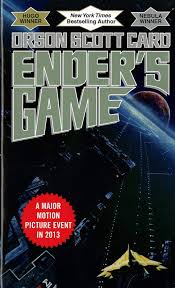
Foreshadowing is more than just a tool for reader satisfaction. It’s a fundamental literary device that creates narrative cohesion and a sense of inevitability. By weaving small hints and events throughout a story, foreshadowing ensures that critical moments feel both earned and impactful. Ender’s Game by Orson Scott Card is a great example of this. The subtle clues leading up to Ender’s revelation build on escalating realism, Mazer Rackham’s secrecy, and Ender’s growing guilt. These seemingly minor details foreshadow both his ongoing battle and the emotional turmoil that follows his ultimate realization. The ability to infuse a story with such subtle hints strengthens its overall structure while reinforcing an unavoidable truth, the path was always leading here.
The silent inevitability of foreshadowing also builds anticipation and suspense. As humans, we’re paying more attention than anyone gives us credit for. That’s why when it comes out that your uncle Greg is having an affair, you’re not as surprised as everyone else. There were hints of his unhappiness at family parties, a sudden change in his behavior, and a new smile you’d never seen before. The whole time you may not have realized you were waiting for the reveal, but the payoff is satisfying, as you say you knew it. That’s the same thing you want with your book’s foreshadowing.
Anticipation and suspense are the background noise in your story that keeps the readers turning pages. They’re invested for many reasons, but one of them is because your reader’s brain has picked up the subtle moments and details that promise something bigger by the end of the book. These clues are most recognized in murder mystery novels where each object, moment, or person holds a different meaning and can foreshadow a different ending. In Agatha Christie’s The Murder of Roger Ackroyd, Christie plants tiny hints through narrative control, a fascination with investigatory techniques, and other character’s observations. Each piece of the puzzle is present, but hidden in plain sight. Something we’ll talk about more later.
When done well, foreshadowing allows for improbable events to feel plausible. This is where a lot of authors run into issues by trying to force these moments. Much like we talked about in last week’s post, the foreshadowing details should fit naturally into the story and hide in plain sight. It’s all about surprising the reader, but reminding them of the inevitability of the outcome.
Types of Foreshadowing Techniques
The first step in writing foreshadowing to its full effect is understanding the types of foreshadowing you can use. There are four main types of foreshadowing, though you may find others useful. We’ll be talking about explicit, implicit, false, and structural foreshadowing. Each of these have their strengths and best genres to be used in. If you want a TL;DR skip to the table below for a basic explanation.
Explicit Foreshadowing

Explicit foreshadowing involves direct hints, prophecies, warnings, or dialogue that clearly signal what’s to come. Think of it as laying down narrative instructions for how the story will unfold. While the path from the foreshadowing to the payoff may be winding or unclear, the destination is firmly established. When you use explicit foreshadowing, you’re making a promise to the reader: the elements you’ve introduced will return at the right moment. This technique thrives in fantasy, tragedy, and epic narratives, where it reinforces clear objectives, heightens dramatic stakes, and sustains anticipation throughout the journey.
Examples:
- Fantasy: In Harry Potter and the Prisoner of Azkaban, Professor Trelawney makes a prophecy about Voldemort’s servant returning to him. This directly foreshadows Peter Pettigrew’s betrayal.
- Drama: In Shakespeare’s Romeo and Juliet, Romeo says he prefers to die sooner than live without Juliet, foreshadowing the tragic ending.
Implicit Foreshadowing
Implicit foreshadowing relies on subtle clues, symbols, or motifs that quietly guide the reader toward an inevitable outcome. To think about it outside of writing, consider the implied steps we take to complete a task, like making toast. You don’t usually think about plugging in the toaster or inserting the bread, but without those steps, you won’t get toast. Similarly, implicit foreshadowing works beneath the surface. It might appear as a small detail, a line of dialogue, or a character quirk that seems ordinary at the time but gains significance later. These clues blend seamlessly into the story, often disguised as world-building or characterization, only revealing their true purpose in hindsight.
Examples:
- Horror: In The Shining by Stephen King, the recurring motif of mirrors and reflections subtly hints at duality and madness.
- Literary Fiction: In Of Mice and Men by John Steinbeck, Lennie’s accidental killing of a puppy foreshadows the tragic climax.
False Foreshadowing (Red Herrings)

False foreshadowing, commonly known as a red herring, is a deliberate misdirection that leads readers to expect one outcome, only to be surprised by another. In detective mysteries, red herrings often take the form of false leads, something that mirrors real-life investigative work. They can also arise from overheard snippets of conversation, leaving readers to believe they understand the full context when they don’t. This technique works especially well in drama and suspense stories. However, like any narrative device, overusing red herrings can frustrate readers, making them feel misled or manipulated at every turn.
Examples:
- Mystery/Thriller: In Gone Girl by Gillian Flynn, the narrative misleads readers into thinking Nick is guilty, only to reveal a twist.
- Crime Drama: In Knives Out, several clues point to one suspect, but the real culprit is someone unexpected.
Structural Foreshadowing
Structural foreshadowing is when you use the structure of the story itself, such as repeated patterns, mirrored events, or parallel plotlines, to hint at future developments. One of the best story structures for structural foreshadowing is the chiastic structure, or mirrored storyline. In a chiastic structure, events in the second half of the story reflect and contrast with those in the first half, creating a mirrored effect. The resolution often echoes the introduction—returning to the same place, repeating key actions, or revisiting similar events.
Example:
- Science Fiction: In Arrival (film), the non-linear narrative structure foreshadows the protagonist’s perception of time.
- Historical Fiction: In Atonement by Ian McEwan, the structure of the novel (a story within a story) foreshadows the unreliable narration and the twist ending.
Comparison of Strengths
| Type | Strengths | Best Used In |
|---|---|---|
| Explicit | Clear, dramatic, builds anticipation | Fantasy, Tragedy, Epic |
| Implicit | Subtle, immersive, rewards close reading | Literary Fiction, Horror, Drama |
| False/Red Herring | Surprising, engaging, adds twists | Mystery, Thriller, Crime |
| Structural | Thematic depth, narrative complexity, elegant storytelling | Sci-Fi, Literary Fiction, Experimental |
The Art of Subtle Implementation
Now that you’ve decided on which type(s) of foreshadowing you’ll use, it’s time to put it into play. The goal is to add your foreshadowing hints without telegraphing your intentions.

Character’s initial reactions can be a great tool for implying that there’s something wrong with another character, even if everything else seems to say they’re good. In the movie Austenland the love interest Martin comes across as a good, down-to-earth guy who seems to be the only one with an interest in Jane, the protagonist. He’s portrayed as the help, but there was something in the way his kindness came across too easily that told me he’d be just another actor that would break Jane’s heart. Sometimes the character will pick up on the clue, or they’ll be blinded by their desires and the reader will see something that seems off.
Another subtle tool for foreshadowing is dialogue. Words have meaning. When a character jokes about death early in the story, only for it to find them later, it reflects the idea behind the law of attraction—the notion that spoken words can shape reality. The things your characters put into the world might just come true.
A real-life example? When I was preparing for deployment, some of the guys joked with the infamous South Park line, “Oh my God, you killed Kenny!” I shut that down immediately. I didn’t want to risk it becoming reality. Whether it’s real or not, many people share a quiet paranoia that speaking of disasters might invite them in. That tension makes dialogue a powerful and relatable tool for foreshadowing in your story.

Layering your foreshadowing is another way to present the potential information while throwing off your reader on which parts are foreshadowing. There’s the popular, Chekov’s Gun, where you introduce an object, event, or detail early on that seems minor but plays a crucial role later. The great this is that this element can work distract the reader as just character building information. In one of my short stories, I showed a sawed-off shotgun behind the couch that I used to show the character’s paranoia. Then I brought it back to the climax as a critical weapon to the protagonist’s survival.
You can also layer character arcs with behavioral foreshadowing. Small habits, the little things that make you suspect Uncle Greg might be cheating, are subtle tells that hint at larger truths. Every person has their own signals, and it’s no different for characters in your stories. Once you determine the dark night of the soul, or its equivalent, you can identify the flaws that drive the character to their lowest point.
Writing Exercise: The Breadcrumb Trail
Setup:
Choose one of these scenarios or create your own:
- A character who seems helpful but will betray the protagonist.
- A seemingly innocent object that will become crucial to the climax.
- A casual conversation that will predict a major plot twist.
- A character flaw that will lead to their downfall.
Exercise:
Part 1 – Plant the Seed: Write a 200-300 word scene where you introduce your chosen element. Focus on making it feel natural and unimportant. Use these techniques:
- Embed it in normal conversation or description
- Have characters react naturally (maybe one notices something “off”)
- Layer it with other details so it doesn’t stand out
- Make it serve a current story purpose (character development, world-building, etc.)
Part 2 – The Payoff: Write a 150-200 word scene showing how this element becomes crucial. The key is making it feel both surprising and inevitable. Ask yourself:
- How can the reader think “I should have seen this coming”?
- What makes this feel earned rather than forced?
- How does the earlier context give this moment more impact?
Reflection: Review both scenes and ask:
- Does the foreshadowing feel natural in the first scene?
- Is the payoff satisfying without being obvious?
- What type of foreshadowing did you use (explicit, implicit, false, or structural)?
- How could you make the connection even more subtle or impactful?
Conclusion
Mastering foreshadowing is like learning to speak in whispers that echo through your entire narrative. The best foreshadowing doesn’t announce itself—it lives quietly in the corners of scenes, tucked into dialogue and character reactions, waiting for the perfect moment to bloom into significance.
Whether you’re planting explicit prophecies in a fantasy epic or weaving subtle behavioral clues through literary fiction, remember that your readers are far more perceptive than you might think. They’re already watching for Uncle Greg’s tells, already sensing something’s off about that too-perfect love interest.
Your job isn’t to hide the truth from them, it’s to trust them with the breadcrumbs while keeping the destination just out of sight. When you strike that balance, when the revelation hits and your readers think “I knew it!” while being genuinely surprised, you’ve created that magical moment where inevitability meets surprise, and your story transforms from mere entertainment into an experience they’ll remember long after the final page.
P.S. If you have an actual Uncle Greg, I’m sure everything’s fine.
Additional Resources
Books:
Articles:
- The Use of Foreshadowing in a Story: Key Insights – Bookish Bay
- Types of Foreshadowing in Literature with Examples – Storyboard That
- “No, Don’t Tell Me”: How & When Should We Use Foreshadowing? – Writers Helping Writers
Previous Post: Plot Twists – Surprising Your Readers (Without Losing Them)
Next Post: Subplots – Adding Depth to Your Main Story
Discover more from Kenneth W. Myers
Subscribe to get the latest posts sent to your email.
 Kenneth W. Myers