
- Introduction
- Character Arcs in Speculative Settings
- Author Spotlight: Travis Deverell (Shirtaloon)
- Writing Exercise: Character Arc Mirror Exercise
- Conclusion
Introduction
Authors of Tomorrow,
I hope your April was productive and that you enjoyed our posts on the Elements of Plot! This month, we’re diving into a topic that was mentioned in almost every post of that series: character arcs. It’s a crucial element that can often trip up writers, leaving a story feeling more like a meandering journey through a fantastical land.

Given that our audience is primarily science fiction and fantasy authors, we’ve tailored today’s featured article to focus on speculative fiction. We hope you find some valuable tips in the post, and we’d love to hear which article from the Elements of Plot series was your favorite!
Character Arcs in Speculative Settings
Character transformation lies at the heart of compelling speculative fiction. Whether your protagonist wields magic or pilots starships, their inner journey must resonate just as deeply as their fantastical adventures. Here’s how to create character arcs that shine in otherworldly settings.
Balancing Human and Fantastical Elements
The most memorable speculative characters experience recognizable emotional journeys while navigating extraordinary circumstances. Their supernatural abilities or technological mastery should reflect internal growth rather than merely increase their power.
Consider Prince Zuko from “Avatar: The Last Airbender,” whose firebending ability directly mirrors his emotional development. As he evolves from an angry, honor-obsessed prince to a compassionate leader, his relationship with fire transforms from destructive force to life-giving energy.

Effective character arcs in speculative fiction require:
- Identifiable flaws and weaknesses
- A compelling trigger that sets change in motion
- Tests and conflicts that challenge resolve
- Growth that feels earned through experience
Using Your World to Drive Character Growth
Your world-building elements can serve as powerful catalysts for character transformation. Magic systems, advanced technologies, and alien cultures can challenge characters in ways impossible in realistic fiction.
As one writer notes, “Fantastical elements provide ample metaphors and externalizations of inner change.” An elf struggling with nature’s disconnection might represent depression; a character unable to access their magic due to trauma must heal emotionally before achieving external power.
In N.K. Jemisin’s “Broken Earth” trilogy, protagonist Essun’s ability to control seismic energy intertwines with her personal journey. Her development toward healing parallels the planet’s struggle for balance, creating a character arc inseparable from the world itself.
Avoiding Common Pitfalls
When crafting character arcs in speculative settings, watch for these common mistakes:
- Overemphasizing abilities at the expense of emotional development
- Resolving character flaws too easily through magical solutions
- Failing to connect fantastical elements to meaningful internal change
The most effective approach balances spectacle with emotion. Your character’s climactic moments should activate both their external powers and internal growth. When a character finally masters their magical ability or technological skill, this achievement should represent the culmination of their psychological journey.
Remember that even in the most fantastical settings, characters must respond to challenges with psychological authenticity. They may have extraordinary abilities, but their fears, desires, and growth patterns should reflect recognizable human experiences—making the extraordinary relatable and the impossible emotionally true.
If you want to learn more about character arcs, please visit these other posts:
The Transformational Character Arc
Round Characters Vs. Flat Characters
Character Creation: Positive Change Arcs
The Destructive Character Arcs
Character Arcs: How to Drive Transformation and Growth in Sci-Fi and Fantasy Stories
Author Spotlight: Travis Deverell (Shirtaloon)
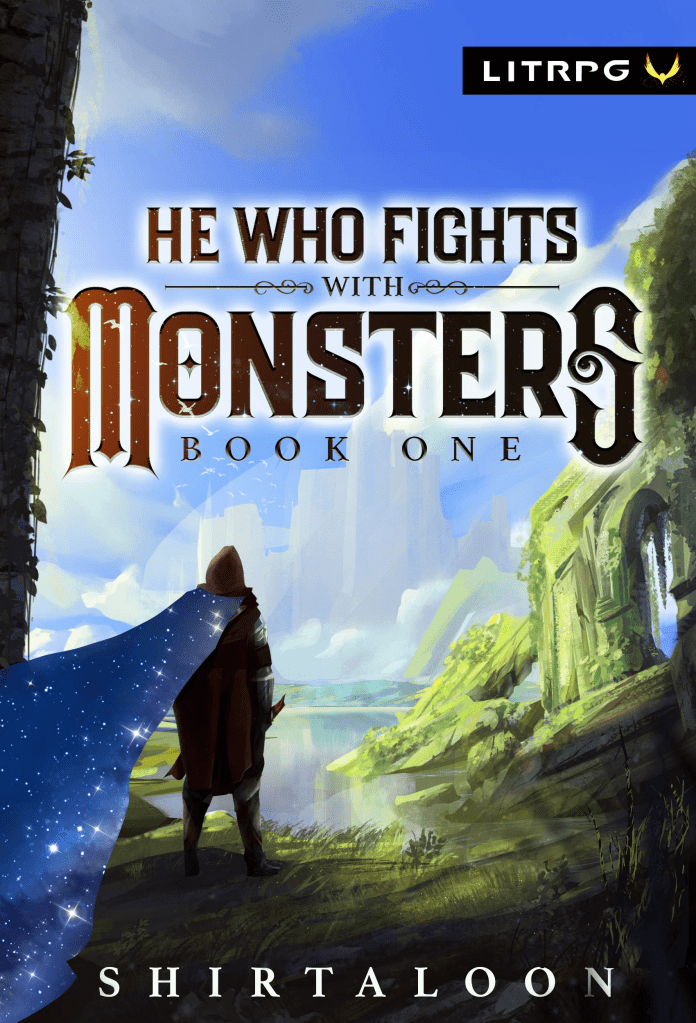
Travis Deverell, A.K.A. Shirtaloon, is the author of the He Who Fights With Monsters series. A LitRPG that follows Jason Asano, a quirky but lovable character, through the challenges of being brought through an inter-demensional channel into another world. Travis Deverell accounts his history of becoming an author as “In the middle of penning a dry academic paper, Shirtaloon had a revelation: he desperately needed to write something very silly.” (hewhofightswithmonsters.com)
The reason I’ve chosen Deverell for this month’s author spotlight is because his character arcs are great and offer a lot for writers to learn from. While LitRPG is a niche genre, that doesn’t steal from its validity. For those unfamiliar with the term LitRPG or Gaming Fiction, just imagine a video game written out as a book. It’s a wildly fun genre I’ve grown to love since I found it a year ago. Anyway, let’s dive into He Who Fights With Monsters and why readers keep coming back to Asano’s journey.
He Who Fights With Monsters: Character Arcs
Even just looking at Book 1 of He Who Fights with Monsters, we see a lot of characters with great arcs, and they are all in different points of their journey. Jason Asano, while having to figure out the new world, also has to face a growth arc that prepares him for the future. He begins by hiding behind his personality quirks and beliefs, but as he gains experiences he’s never had, Jason becomes a truer version of himself.
Rufus Remore is a well-trained and skilled adventurer from a well-regarded family. His struggle to balance his strict adherence to rules with the chaotic way of the world makes his arc a great contrast to Jason’s. He is in his leadership phase, and is growing into the role throughout this book.
Farrah is in the mentoring phase of her journey, if you checked out the K.M. Weiland book you’ll know where this is. The struggle of being a mentor is knowing the past isn’t perfect and yet Farrah still helps Jason in the new world.
While there are many other characters you can study, these three are the most critical. I think if you take the time to really learn these characters you’ll really learn a lot from them, especially if you go on to the other books.
He Who Fights with Monsters by Travis Deverrel (Shirtaloon) falls into a niche audience, but that doesn’t make it any less of a great book. Give the books a chance, and if you don’t like them, then decide why and use those lessons to improve your writing. Overall, Travis Deverell’s He Who Fights With Monsters series offers rich character development and engaging storytelling, making it a must-read for fans of the LitRPG genre.
Writing Exercise: Character Arc Mirror Exercise
Today, you’ll practice creating or refining your own character arc.
- Choose a character from your current speculative fiction project.
- Identify one fantastical element in your world (magic system, technology, alien culture, etc.).
- Write a scene where this fantastical element directly mirrors or externalizes your character’s internal struggle.
- In this scene, show your character:
- Confronting a personal flaw or weakness
- Experiencing resistance or difficulty with the fantastical element
- Making a small but significant step toward growth
For example: If your character struggles with trust issues, perhaps their telepathic abilities become erratic when they try to shield themselves emotionally. As they learn to be vulnerable with one person, their telepathy becomes clearer in that relationship.
Focus on making the connection between the internal journey and fantastical element explicit, showing how one affects the other. This exercise helps integrate your world-building with character development, creating more cohesive and meaningful arcs.
Conclusion
In speculative fiction, the most compelling character arcs emerge when fantastical elements serve as powerful metaphors for internal transformation. Whether through magical abilities that evolve alongside emotional growth like Prince Zuko’s firebending, or world-building components that challenge characters to overcome personal flaws, the key lies in balancing the extraordinary with authentic human experiences.
By avoiding common pitfalls such as prioritizing abilities over emotions or using magical solutions as shortcuts for character development, writers can create protagonists whose journeys resonate deeply with readers, even in the most fantastical settings.
What fantastical element in your story could serve as a mirror for your character’s inner journey? Share your thoughts in the comments below!
Previous Post: Falling Action and Resolution: Bringing It All Together
Previous Newsletter: April Newsletter
Next Post: Mastering Story Structure: Connecting the Dots Across Your Narrative
Next Newsletter: June Newsletter
Discover more from Kenneth W. Myers
Subscribe to get the latest posts sent to your email.
 Kenneth W. Myers
Pingback: Mastering Story Structure: Connecting the Dots Across Your Narrative – Myers Fiction
Pingback: Falling Action and Resolution: Bringing It All Together – Myers Fiction