- Introduction
- Crafting Effective Falling Action
- Resolution Essentials
- Endings
- Writing Exercise: Crafting Effective Story Endings
- Conclusion
Introduction
While the climax is often the height of the story, your book shouldn’t end there. Why? Didn’t all the crazy, exciting stuff end and now the protagonist has achieved their objectives? So write the end, and get on to the next book. Well, no, don’t do that. Here’s the thing, readers want there to be more. You spent, say, 255 pages creating your story, carrying your character and readers along, and they need more than just “The Protagonist struck down the Dark Lord and all was well with the world.” That will most likely lead to many one or two star reviews.

Your readers want to see what happens after the climax. The falling action and resolution give the reader the so what of the story. They also justify why the reader spent however many hours and abandoned real world responsibilities to read your book. Now, there are some differences when it comes to standalone books and series, but we’ll cover that a little later. The goal of your falling action and resolution is to tuck your reader in after the long trek through your book and leave them saying, damn, that was a good read.
Sounds nice, right? Well, let’s try to dive into how you make that satisfying ending after the crazy climax.
Crafting Effective Falling Action
Every action has a consequence or reaction. With the climax being the pinnacle of action in your story, it should have some sort of fall out directly connected to the climax. This is where your falling action comes in. Your falling action is the “yes, but/and” statement of your story. The character defeated the great dragon, but they’ve now created a new enemy in another, stronger dragon. Or the character defeated the great dragon, and they now face the guilt of killing a magical creature that may have been the last of it’s kind. These are only a few ways to craft your falling action, so let’s go into the components of falling action to help you build the best ending you can.
Components of Falling Action
Emotional Aftermath
Sometimes stories end on a weird note, feeling rushed or turning a 5-star book into a disappointment. Often, this happens because the writer misses out on the emotional aftermath of the climax. After spending so long building up to and executing the climax, it’s crucial to let your reader process the events just as the protagonist does.
If your protagonist lost someone or a part of themselves in the climax, you can’t just end the story. You need to show the character processing the events in their own way to reveal how the climax impacted them. This also gives the reader a chance to reflect on the situation themselves. You can turn this emotional aftermath into a mini-arc for the few pages or chapter that it takes to process the information.

For example, the protagonist might initially feel a surge of pride after a victorious battle, only to experience a gradual decline as they grapple with the consequences of their actions. Alternatively, they might focus on the positive outcomes and feel uplifted as they receive rewards for their actions. Your falling action and it’s mini-arc will also depend on another important element, consequence revelation, which we’ve lightly touched on already.
Consequence Revelation
As mentioned earlier, every action has a consequence. Where the climax is almost all action, then it’s time to study what consequences come of this. With the falling action, you’ll want to show this direct fallout. The great thing about consequences is they come in many forms. Following the climax, the story shows short-term effects and suggests long-term ones. Let’s look into some of the immediate consequences, though.
Immediate consequences often appear as physical or environmental changes. If you just had a battle, even if it’s small scale, you’re going to have injuries. Bumps and bruises will cause discomfort, while the loss of a limb or friend can have massive psychological impacts. What happens when your protagonist was barely missed by the searing fiery dragon flame? Probably some burned hairs, if not some burned skin from the heat. Now that the adrenaline is gone, your characters will start noticing the small physical things and also the surrounding changes.
The conflict can completely transform the environment, whether that’s destruction, beautification, or somewhere in-between. Recent Marvel shows have considered the aftermath of the heroes saving the day and the effects on the physical world around them. You can use the environmental changes to show the cost of saving the day, or what progress has been held back by the previous force ruling. You can often tie this transition in with your theme to reflect your story’s message.
There are many more aspects of this, but that might be a whole post in itself one day. For now, start with immediate physical and environmental consequences and see where that takes your story. Now, it’s time to process what just happened.
Character Processing
Ensure your character processes the situation. It’s not always going to be the hero slaying the dragon, winning the heart of his love, and then riding off into the sunset without another thought. Your character just went through something crazy on their scale of life and they’ll be thinking about it. Even if they don’t want to. The point of the falling action is to show your character’s immediate reactions to the events of the climax.

Consider the following questions in your falling action:
- If your character kills someone/something, then have they ever done it before? If so, how is this impacting them? If not, this will definitely impact them, but not everyone in the same way.
- If your character had to become someone they never wanted to be, what would they feel afterward? Are they disgusted with how far they went? Do they realize that maybe that’s the true they’ve been hiding from?
- Is your character stuck with a near-sighted or far-sighted focus what they are worried about? Are they worried about what the person in front of them is going to say? Or their potential grandchildren looking back on this story?
Whatever you choose to focus on as your character reflects, try to tie it in with the themes and to offer comparison of who they are and where they came from. Once you’ve explored the direct consequences enough that the reader is satisfied, you’ll be ready to go onto the story’s resolution.
Resolution Essentials
The resolution encompasses the last moments of the book. You’ll focus on closing out many aspects of the story while you implicate others. Answers will abound as you really lock in your theme and choose your closing scene. Remember how I mentioned you could ruin a great book with a poor ending? We’ll cover that now. Use the tips below to build a satisfying finish.
Elements of Satisfying Resolution
Character Arc Completion
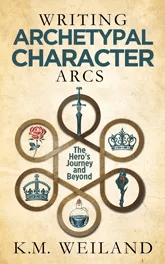
Every story, even if it’s part of a series, should close out some form of character arc in its resolution. The protagonist’s character arc should have finished just before the climax, and now it’s time to look at your other characters. The secondary and other key characters in the story should close out any started arcs before the close of the book. This doesn’t include your stereotyped bar-keep, who will continue to clean a dirty glass in front of each patron that comes in. Instead, focus these efforts on some of your other character roles in the story. If you have a mentor that didn’t die off in a critical moment, what do they look like now? How have they been changed by mentoring someone? K. M. Weiland has a great method of looking at the lifespan of a character and the many arcs they go through as they age. Check out this website if you’d like to learn more, and her books on writing are definitely worth picking up!
Theme Reinforcement
Your resolution is your last moments to give your readers a nudge toward “hey, love is more important than wealth” or “Peace can gain us more than war.” The goal here is to show this message through the protagonists last scene(s) and not slapping your reader with an all caps and bold moral of the story. If your character needed to learn that love is more important than wealth, you could use a contrasting scene where the character sees a wealthy person in their feigned happiness and the genuine happiness they have now that they are fully committed to a life of love.
Theme reinforcement is about leaving your reader with a tone to reflect on the entire book with. I like to think of the movie “The Day the Earth Stood Still.” I still remember walking out of that movie with my mind so blown that my brother and I weren’t talking about it. We were still trying to process it, everything we just watched, and the closing scene ensured that we’d be forced to analyze what we’d just watched. I won’t ruin it if you haven’t seen the movie, but the basic question it leaves viewers/readers with is, what will you give up to keep living? Now, there’s a lot of debate about the meaning behind this ending, and that comes down to perspective. But if you have a similar ending, then getting people talking about it isn’t really a bad thing.
Final Clarifications
You’ve spent about 300 pages entertaining your readers, keeping them on the edge of their seats with some mystery, and offering questions no one knows the answers to. Well, it’s time to come clean. The resolution is where you can finally reveal most, if not all, of your mysteries and how these secrets truly impacted your characters. But don’t let this become an info dump.

Offering your readers the final clarifications to the unanswered questions is a great way to satiate your readers at the close of the book. There are plenty of stories that have left readers feeling jipped as big questions were never answered and even smaller ones that didn’t matter were. One example of this is The Maze Runner series by James Dashner. While the series closes out the smaller character interactions, it doesn’t fully answer the major questions about the world-building and the motivations of the organization WICKED.
Then you can go in the other direction, where you answer too many questions and leave readers feeling unhappy. One example of this, and I’m sorry PotterHeads, but it’s true, is the epilogue in Harry Potter and the Deathly Hallows by J. K. Rowling. The “19 Years Later” scene gave away too much, leaving readers unsatisfied. I can see what she was trying to do, in showing the story coming full circle, but it also hurts that final closure we needed from the story. I know that not everyone will agree with this, so debate. The reason I didn’t like it was because of the last piece in a great resolution.
Future Implications
Future implications imply that there is a story beyond the final page. Before we get into the nitty gritty of this, let’s consider the great things implications can provide. Unanswered story questions create opportunities for sequels, spin-offs, and fan fiction, attracting more readers. These stem from the seeds of imagination left in the last moments of the book. Providing subtle hints about unexplored characters, uncharted worlds, or unresolved conflicts invites your readers to fill in the gaps themselves.
In the publishing industry, they say that every book series may not actually turn into a full on series of they don’t succeed. Which is why writing instructors everywhere encourages the concept that each story should be contained in itself. In reality, some questions remain unanswered. Think of someone who has come into your life for a time and then left. Have you ever explored a story-mode of their life? Who do you think they are today? With our connectedness in the modern world, we might get some answers, but you won’t be able to know if they think of you, or how they view your time in their life. This is the power of a standalone book with unanswered questions. It lets the story linger in the reader’s imagination long after the last page.
Endings
Endings, whether that’s an epilogue or the last chapter, create a certain momentum that drives the readers in a certain direction. The most common endings are closed, open, circular, and twist endings. Each of these have their own benefits and restrictions in your story and depends on your goals. Let’s explore each and see which one is the best for you.
Closed Endings
These endings mark the end of a series or standalone book that leaves the reader with no doubt that they’ve seen the last of this arc. A closed ending focuses on answering all the major questions of the story and even most of the minor. This tells your readers that they shouldn’t expect another book even if they want one. The benefits of this ending allow you to step away from the story knowing you’ve explored everything you want to in this world. To the readers, it shows that this single book contains everything they love about the story. They won’t need to wait 14 or more years for the last book in a series. Read Stephen King’s Fairy Tale to find the example of a closed ending that still leaves implications of the larger world.
Writing sequels is difficult if the first book has a closed ending. You cleaned it up nicely, so this will often lead to side-series that offer insights into other parts of the world you didn’t already explore. One example of this is The Mortal Instruments series by Cassandra Clare. She has created about six side-series exploring her full world. So, while it can make it harder, it is possible to create beyond a closed ending.
Open Endings
There are times you want to leave an open ending to pull your readers into the next book in the series. Open endings can also leave your readers questioning themselves like I mentioned with “The Day the Earth Stood Still.” An open ending leaves at least one large question unanswered. You’ll see this a lot in series where there’s a larger question overall the series answers. I found this held true in the first book of The King’s Dark Tidings, Free the Darkness, by Kel Kade ties up a lot of the book one questions. The main question introduced in the earliest chapters remains unanswered. Rezkin is forced to continue his journey because the remaining question is too major to let it fall to the wayside.
For standalone books, you’ll find that the unanswered question aligns more with the implications of the entire book. The ending of Dennis Lehane’s Shutter Island forces readers to examine reality and the protagonist’s view of it. I felt this way both with the book and the movie. How your reader interprets open endings can tell you a lot about how the person views the world. These can work extremely well for a standalone book, but it will come down to execution on if it does.
Circular Endings
Circular endings often mirror the beginning of the story in order to give the image of a more complete book. One of the most popular one that comes to mind is the Lord of the Rings series where the Fellowship of the Ring disband in the reverse order they joined the group. Then Frodo and Sam return to the shire changed and alone, just as they left. So this is a tool that can work, but why would you use this one beyond symmetry?
Circular endings can create an enhanced sense of closure. This will work if you have a very unique opening whether that’s setting or situation. The sense of coming full circle can make the story feel complete and harmonious. You can also tie up some loose threads that you wouldn’t have been able to explore otherwise. Remember that farmer’s couple who helped your wary travels at their own risk? What if in the resolution in the return home, they walk past that farm? Is it still there? Do they see the farmers working the field or abandoned equipment? How does this align with the tone that you want your readers to leave with? A lot of questions, but you want to consider these if you’re using a circular ending.
Twist Endings
Twist endings are pretty self explanatory, but you leave your reader on a note of “I didn’t see that coming!” The twist ending can be very divisive among readers for many reasons, but lets talk quickly about why twist endings work.
A well-executed twist ending can leave readers stunned and it elevates their enjoyment of the story. This approach keeps your readers engaged until the last page. It shows the reader that like in life, sometimes things just happen right when you think the end has arrived. It also offers an emotional impact that leaves a lasting impression. Isn’t that our goal with writing, to leave our readers enjoying our story long after they’ve closed the book? It also leads to the re-readability of your book. Many readers will go back to look for the foreshadowing details they missed in the first read-through. The twist ending, like in Shutter Island by Dennis Lehane, makes the book highly discussable and spreads its popularity through word of mouth.
Writing Exercise: Crafting Effective Story Endings
This exercise helps you write satisfying endings that fit your story. You’ll work with different ending types to develop your skills in concluding stories effectively.
Part 1: Setup
Choose a climactic scenario from the options below or create your own:
- A character has just defeated their nemesis in battle
- Two characters have finally confessed their love for each other
- A detective has just revealed the murderer’s identity
- A character has discovered a life-changing truth about themselves
- A team has accomplished an impossible mission
Part 2: Consequence Mapping
For your chosen scenario, quickly brainstorm and list:
- 3 immediate physical consequences (injuries, environmental changes, etc.)
- 2 emotional reactions from your protagonist
- 2 reactions from secondary characters
- 1 unexpected consequence nobody saw coming
Part 3: Draft Three Different Endings
Using your consequence map, write three different types of endings for the same climactic moment:
- Closed Ending: Wrap everything up neatly, answer all questions, and provide complete closure.
- Open Ending: Leave one significant question unanswered while still providing emotional satisfaction.
- Circular or Twist Ending: Either bring the story full circle to mirror the beginning or introduce a final unexpected element that changes the reader’s understanding.
Part 4: Reflection
Answer these questions:
- Which ending feels most satisfying for this particular story?
- How does each ending reinforce a different theme or message?
- Which ending would make you, as a reader, think about the story longer after finishing?
Conclusion
Creating the perfect ending is about more than just ticking boxes, it’s about honoring your reader’s journey. Whether you choose a closed, open, circular, or twist ending, the key is delivering emotional satisfaction that resonates beyond the final page.
Your falling action and resolution transform the climactic moment into something meaningful, giving readers time to process what happened and understand why it matters. A great ending shows the consequences, completes character stories, and reinforces the theme, making the story better overall. Remember: a great ending doesn’t close the book; it opens the reader’s imagination.
Additional Resources
- Craft books:
Previous Post: Climax: Crafting the Peak of Your Story
Next Writing Post: Mastering Story Structure
Discover more from Kenneth W. Myers
Subscribe to get the latest posts sent to your email.
 Kenneth W. Myers
Pingback: Mastering Story Structure: Connecting the Dots Across Your Narrative – Myers Fiction
Pingback: Myers Fiction May 2025 Newsletter – Myers Fiction
Pingback: Myers Fiction Review: Hive by D. L. Orton – Myers Fiction