

Introduction
Your readers have made it over the initial hump of your story and is ready to lock into this world you’ve created. They’re most likely ready to face the crazy of your world and expect you to ramp up the tension and engagement. The rising action is the part of the story that begins that upward drive toward the climax. You can lose your readers here through what is often known as the muddy middle, but a well crafted rising action can drive your readers through to the climax with excitement.
The rising action is “The rising action of a story is the section of the plot leading up to the climax, in which the tension stemming from the story’s central conflict grows through successive plot developments.” (LitCharts.com) This is also the journey part of the story where readers can find their favorite moments in critical scenes. It’s also one of the hardest parts of the story to write. If you don’t believe me, consider how many writing conferences and YouTube videos there are on not writing a muddy middle.
Today I’ll take you through my recommendations to solidify your muddy middle and write a great rising action section of your story. To do this, we’ll use three main techniques: escalation, character development, and pacing.
The Escalation Principle
The escalation principle is one that can work for many stories, but not all. You’ll often hear of this associated with magic systems as well. Timothy Hicks has a great section on this in his book “On Writing and Worldbuilding Volume II.” For today’s purposes, we’ll look at the escalation principle in regards to rising action.

The escalation principle is the storytelling technique that scales the size or impact of the rising actions from small to large. You can even see this across series where the conflict goes from individual, to societal, to worldwide. The Lord of the Rings by J.R.R. Tolkien is a great example as the journey begins with a small group and escalates to a battle involving entire nations.
The escalation principle is a great tool because it allows the reader to expand their understanding of the impact along with the story. This way, you prevent your readers from feeling overwhelmed that each conversation had on page one will dramatically impact the interactions of page two. It will be easier to accept that an insult led to a scuffle than it would to an all out war on page two.
There are two types of escalation that occur in stories. One is strategic escalation, which follows a logical flow and builds naturally from previous events. The other is more of a forced escalation, where the author introduces an escalation moment that feels less organic and more like a deliberate attempt to heighten tension.
Strategic Escalation Vs. Forced Escalation
Strategic escalation is the logical progression of conflict during the rising action of a story. Each event builds upon the previous one, requiring careful planning. Typically, you start with smaller conflicts, such as a fight between siblings, partners, or minor bullying. While you can begin with larger events, like intense fight scenes from action movies, this sets a high standard, necessitating even greater escalation in subsequent events.
For example, in the Harry Potter series, Harry’s journey begins with the surprising revelation that he’s a wizard, a significant shock for a boy living in a cupboard under the stairs. J. K. Rowling escalates the conflict by revealing that Harry is “the boy who lived,” adding complexity to his life. In the first book, Harry fights to save himself and his friends, but by the end of the series, he is battling to save the entire wizarding world. You can use the escalation principle to raise the stakes and reader investment through each chapter and each book.
Forced escalation is the illogical progression of conflict during the rising action of a story. The events don’t seem connected and fail to align in the end. These often appear as shock value scenes or scenes that serve no purpose other than to surprise the reader with something unrelated to the story.
For example, imagine if J. K. Rowling pulled Harry straight from the cupboard, handed him a wand, and then dropped him into the middle of a group of Death Eaters. This abrupt transition would feel disjointed and confusing, lacking the logical buildup that makes a story compelling.
Components of Effective Escalation
Effective escalation is a powerful tool to transform a muddled middle into a compelling rising action. Applying certain principles universally to your rising action can keep readers hooked.turning pages.
- Stakes Increase: The stakes are all about the cost of action or inaction. Every choice a character makes—or doesn’t make—affects the stakes. Sometimes, they have no control over the stakes. While life-and-death stakes are common, losing a valued job or position can be equally compelling. By showing why the stakes matter to the character, you can create suspense as intense as if their life were on the line.
- Consequences Become More Severe: Consequences are the results that follow an action. Similar to increasing stakes, these can compound, and the character often has even less control over them. The character’s choices primarily drive these consequences, but unforeseen outcomes can arise. For example, in Dune by Frank Herbert, Paul Atreides’ decision to embrace his destiny as the Kwisatz Haderach leads to severe consequences. His rise to power results in a brutal jihad across the universe, causing immense suffering and loss of life, which he did not fully anticipate.
- Challenges Become More Complex: Making your challenges more complex is less about making them harder, but more about having them require more from the characters. If you’ve ever played a videogame, you’ll recognize this approach. Since I’m a Pokémon nerd, we’ll use that as a quick example. Each gym requires different strategies, and while they are harder, you have to be ready to fight for longer and face enemies with different attacks (abilities) that may counteract the advantage you thought you had. You can apply this to your story by making the challenges your character faces at first simple. The next challenge progresses to include what they learned in that first challenge, but adds another layer, forcing the character to learn another new thing.
Character Investment Through Rising Action
Another area where rising action becomes critical for story success is character investment throughout Act 2 (or any structure you adhere to). Characters shouldn’t just experience interesting events as they work toward their goal. By layering your plot events with character impact, you can build a strong rising action. Let’s explore ways to increase character investment through rising action.
Linking External Conflicts to Character Development
We’ve seen it a lot in movies, but it also happens in books. Characters go through traumatic or high-stakes situations that don’t seem to align with the rest of the story. I noticed this in my own stories and others during my creative writing courses in college. One of the worst examples was a rape scene that didn’t contribute to the story other than to shock the readers. Traumatic events can significantly impact a character, but if the story isn’t about that event or its effects on the character, it’s best to use something else that aligns with the story problem. If you want to add a traumatic event to transform your character, keep certain elements in mind.
Elements of Impactful Events
Personal Stakes: Transformative character events aren’t just violent occurrences that characters view, experience, or learn about; these are events that take away something from the character. Most of these events should align with your character’s arc and the necessary elements that influence change. For example, if you have a character filled with greed and your goal is to make them a good person by the end of the book, each traumatic event should challenge that belief.

Scrooge is a great example of this, as he’s taken through different events that truly harrow him, though he’s never physically harmed. Much of who Scrooge is comes from his mentality and personal beliefs. Compare that to a character whose strength is everything they identify with, and that strength is taken away, making them an average person.
Take Samson from the biblical story of Samson and Delilah. Samson’s immense physical strength is his defining trait and source of identity. When Delilah betrays him and his hair is cut, he loses his strength and becomes an ordinary man, which forces him to confront his vulnerabilities and ultimately leads to his redemption.
Moral Dilemmas: Layering your character’s external conflicts with moral dilemmas is more than just a will they, won’t they do this or that. It also challenges their belief systems, what they say they are, and how they usually respond to situations. When you complicate your character with moral dilemmas it can either bring your character closer or further away from who they need to be. Every moral dilemma you place in front of the character can define them, and their story progression.
Do this by making a character face a situation that they’ve always spoken out about, but have never had to do themselves. For example, Jason Asano begins his journey in He Who Fights With Monsters by basically bashing his new friends for so blazenly killing people, only to find himself later in the same situation. It’s great to have the moral high ground when you haven’t experienced it yourself, but who does your character become when you actually put that situation in front of them?
Relationship Complications: The interaction between relationship complications and character growth is often used to heighten impact and influence character decisions. It’s important not to limit the concept of “relationship” to just romantic connections. Every individual has a certain capacity for relationships and decides who they invest their time and energy in.
In a story, we can experience the loss of two characters simultaneously, but one loss might resonate more profoundly than the other. This loss can take the form of death, abandonment, or someone being taken away. One of the compelling aspects of relationship complications is that the sense of loss isn’t always immediate. Sometimes, it takes a scene or several chapters for the character to truly grasp the extent of the loss. However, they can reflect on how this loss has influenced their decisions and actions afterward.
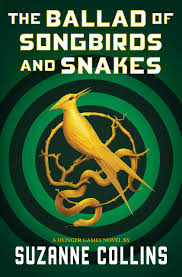
Internal Growth: The rising action provides a chance to guide your characters through phases of internal growth. This period allows you to explore try-fail cycles or success-fail cycles that shape the character’s development. Internal growth can mirror external conflicts, demonstrating how a character’s inner strength is built to face larger challenges.
For example, you might introduce a character to a minor dragon battle early on, where they learn the basics of dragon fighting. Although they might not achieve complete victory, they discover a weak point in the dragon that drives it away. Later, when facing a greater dragon, they exploit this same weak point earlier in the battle to gain an advantage. This shows how experience helps someone grow, especially if they doubted themselves before.
Writing Exercise: Mastering Rising Action Through Strategic Escalation
Practice creating a compelling rising action sequence using the principles of strategic escalation, character investment, and effective pacing.
Instructions
Part 1: Setup (3 minutes)
Choose a character with a clear goal or desire. Write one sentence describing:
- Who your character is
- What they want
- One personality trait that might help them
- One personality trait that might hinder them
Part 2: The Escalation Ladder (7 minutes)
Create a 4-step escalation ladder for your character’s journey. For each step, write 1-2 sentences describing:
- Initial Challenge (Small scale)
- What obstacle does your character first encounter?
- How does it relate to their personality?
- Complication (Medium scale)
- How does the situation become more complex?
- What’s at stake now that wasn’t before?
- Personal Crisis (Large scale)
- What moral dilemma or relationship complication arises?
- How does this challenge your character’s beliefs or identity?
- Maximum Tension (Largest scale)
- What is the final challenge before the climax?
- How have the consequences and stakes escalated to their highest point?
Part 3: Character Growth Reflection (5 minutes)
Write a brief paragraph from your character’s perspective reflecting on how they’ve changed from step 1 to step 4. Consider:
- What have they learned?
- How have their priorities shifted?
- What new skill or understanding have they gained?
- How are they better equipped to face the final challenge?
Conclusion
The rising action is a critical component that transforms a good story into a great one. By implementing strategic escalation, developing meaningful character investments, and maintaining deliberate pacing, you can create a compelling journey that keeps readers engaged throughout your narrative. Make every challenge and choice lead to a surprising but unavoidable climax.
A strong rising action makes the middle of your story exciting and reveals characters’ true selves. Your story isn’t just moving forward; it’s climbing steadily toward something extraordinary.
Previous Post: April Newsletter
Previous Writing Post: Inciting Incidents: Kick-Starting Your Story
Next Post: The Midpoint: Turning the Tables on Your Protagonist
Discover more from Kenneth W. Myers
Subscribe to get the latest posts sent to your email.
 Kenneth W. Myers
Pingback: Mastering Story Structure: Connecting the Dots Across Your Narrative – Myers Fiction