
- Introduction
- Background and Context
- What Is Theme? Beyond Surface Meanings
- Plot as a Thematic Delivery Mechanism
- Writing Exercise: Theme Discovery and Character Exploration
- Conclusion
- Additional Resources
Introduction
Hey Author of Tomorrow, I hope your year of plot and structure has started off well. I know we’re in the dreary part of the year, but hold strong. These cold months will pass soon enough. After the holiday season, it can seem like a drudge as the theme seems to be just to survive until the warmth returns.
Theme is something that is talked about in literary circles, podcasts, and writing conventions. We need theme, but don’t force theme. The theme will present itself as you write the story. You need to have a theme in mind as you write the story. These are all pieces of advice given to writers across the board. Can you tell why we struggle with theme?
We struggle, or at least I do, with weaving meaningful themes into plot structure because we’ve heard so many ways to create and implement theme. Today, we’ll work to create a better understanding of why we care about theme, what theme is, and how plot and theme work together to make memorable narratives.
Background and Context
Theme is something that has been around for so long, you would think it wouldn’t be the most challenging part for some writers. You can find examples of theme in ancient literary works like The Epic of Gilgamesh (circa 2100 BCE), which explores themes of friendship, mortality, and the quest for immortality. Or you can dive into Classical Literature with Aristotle’s Poetics (around 335 BCE). Many of the tales from medieval times focused on moral and religious lessons. Themes have only diversified as time and humankind have evolved, but their core purpose has remained the same.

Successful novels and screenplays demonstrate that plot is not just about what happens, but what it signifies. As authors, we use theme to provide deeper meaning and provoke thought in the reader. While these themes will change, we’re aiming to improve someone’s life through the stories we write. The exact “how” might not always be clear at first, but that’s okay. One of my leaders in the military told me that we don’t always know why we did something at first. We may know the “why” of the moment, but the long-term “why” comes back to us long after we’ve started that journey.
Understanding theme is more than a surface-level message, it’s something that resonates with the reader long after they’ve closed the book. Let’s look at what theme is so we can better understand how to take our storytelling to that next level.
What Is Theme? Beyond Surface Meanings
Theme is the underlying philosophical or emotional core of a narrative. This is the simplest description that files down some massive into one line of text. The theme in your story can represent something you agree with, something you’re curious about, or something you’re completely against. Most of the time you’ll be writing themes in contrast through different characters. Yet, we still haven’t defined what theme is completely. Let’s dig a little deeper.
What is the thing we’re trying to emulate through theme? It’s the universal human experience or profound insight driving the story. The reason themes resonate or don’t with readers are relatable topics. That’s why themes are often small words with big meaning. Love is a broad theme that is explored in every genre. The type of love or principle of love shared in the stories vary, but the theme is something that many people have experienced once or more in their life.

One way I like to look at theme is taught by K. M. Weiland in her book Writing Your Story’s Theme, “theme is an abstract argument (moral or existential) that proposes a truth about reality.” Think back to why you started writing your story. While it may have sounded like a good idea, take time to reflect on why it seemed like a good idea. What sold you on your story? Once you have that image or thought in your mind, let’s talk a little about where theme comes from.
Themes emerge through character choices, narrative conflicts, and story progression. Your story is your tool to share a perspective of humanity. The character choices and how you choose to reflect those in your works will build one layer of the theme. Think of it as a demonstration of the ways you think people should or shouldn’t act. Approaching character choices in this way will make each choice have a purpose to reflect the character, their worldviews, and how those align with the theme.
Plot as a Thematic Delivery Mechanism
Plot provides the structural framework for exploring, challenging, and expressing theme. You can carefully craft your plot events and character interactions to create a narrative that not only entertains, but also conveys a deeper meaning. Before we go much further in this discussion, I want to point out that a lot of theme-work is taken care of during the revision process. Trying to focus too much on the theme during the first or zero draft can cause unneeded stress and leave your book in the “To Be Completed” folder. With that, let’s dig into how plot can illuminate or challenge the thematic premise.
Character Decisions as Thematic Expressions
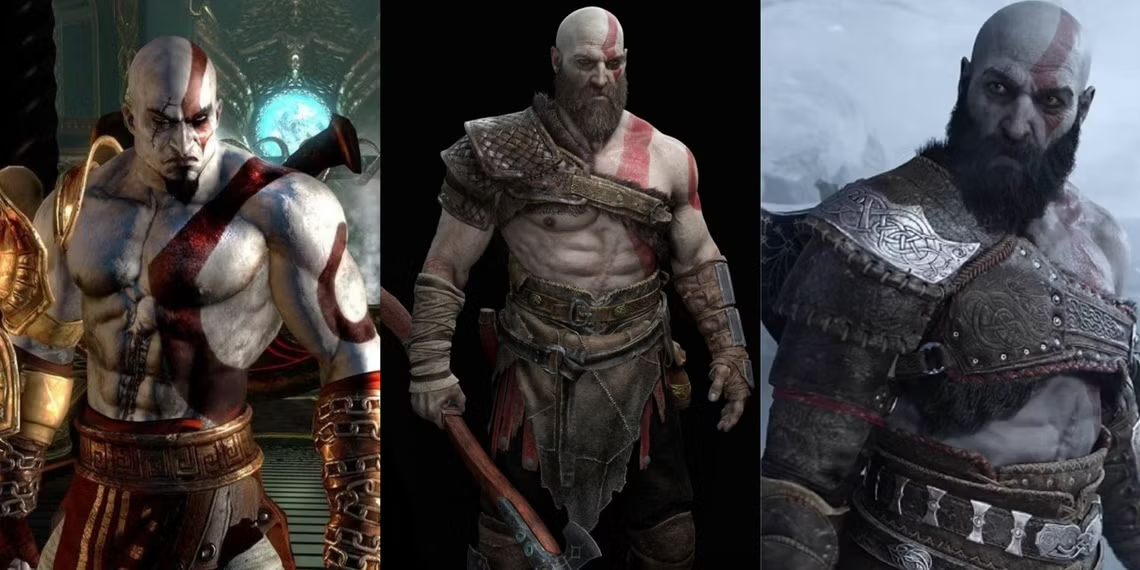
One of the tools in your theme kit is your characters. These wonderful, multi-purpose story elements are like your Swiss army knife for storytelling. One way to view theme comes from Jessica Brody’s Save the Cat! Writes a Novel. She explains that the theme stated is essentially the protagonist’s need. This is established early on, as characters are often told what they need to be, do, or become to achieve what they need. However, most of the time, they’re distracted by their wants. This presentation may come as a heavy-handed comment from the mentor figure or a subtle remark from a passerby or minor character. With the established need of the story, you can set your goalposts for each step of the story.
For example, if you’re working on a YA Sci-Fi/Fantasy with the theme of Self-Discovery and Identity, the goal by the end of the book is to have your character reach a point where they know who they are and what they want to work toward in life. To show growth, you’ll need to start your character as unconfident, less opinionated, and probably feeling like a carbon copy of their parents. To grow and develop believably, your characters will need to make small choices that help them dissociate from their past selves. Your goalposts might look something like this: The character realizes their parents don’t understand how the world works. Then, the character copies someone else, resulting in another failure. The character tries their own ideas, which might not be very successful at first but eventually lead to their goal.
External and Internal
Theme isn’t just explored by the character but by the external and internal elements of the story. Whether it’s external/internal obstacles or internal/external conflict, you can use the give and take of your story to emulate your theme.
Continuing with the example of the theme of Self-Discovery, you can view obstacles as objects or events that challenge your character’s lies. How many novels force the protagonist to face a challenge alone that they initially run away from? Take The Giver by Lois Lowry, for instance. Jonas, the protagonist, long identified with his society and their standards, embarks on a journey where he learns what it means to be an individual, even against society’s desires. If you haven’t read this book, I highly recommend it! Also, if you decide to reread it, watch for the obstacles—both internal and external—that challenge Jonas in relation to the theme. I’ll give you some hints: look for societal restrictions, isolation, moral dilemmas, physical and emotional hardships, and internal conflicts.
Writing Exercise: Theme Discovery and Character Exploration
Today you’ll practice developing theme through character choices and narrative progression.
Instructions:
- Choose a universal human emotion or experience (e.g., resilience, identity, belonging, transformation).
- Create a character profile with the following details:
- Name
- Age
- One significant internal struggle
- One external challenge they’re facing
- A belief about themselves that is fundamentally untrue
- Write a short scene (500 words) where your character makes a decision that:
- Challenges their current belief system
- Reveals a small but significant moment of personal growth
- Hints at the broader theme without explicitly stating it
- Reflect on your scene:
- How did the character’s choice demonstrate the theme?
- What internal or external obstacles did they overcome?
- How might this scene be a stepping stone in a larger narrative about the theme?
Bonus Challenge: Share your scene with a writing partner and ask them to identify the emerging theme without you explaining it directly.
The goal is to practice showing theme through action and character development, not through direct exposition.
Conclusion
Understanding theme is not about forcing a message, but about allowing your story’s deeper meaning to emerge organically through character choices, plot progression, and narrative conflicts. By viewing theme as a dynamic exploration of human experiences rather than a rigid didactic statement, writers can create rich, resonant narratives that connect deeply with readers.
Remember that theme is a journey of discovery, both for your characters and for yourself as a writer, and the most powerful themes often reveal themselves subtly through the intricate dance of plot, character, and emotional truth.
Additional Resources
- Books on Theme and Plot
- “Writing Your Story’s Theme” by K.M. Weiland
This book provides an in-depth exploration of theme and how to effectively incorporate it into your story1. - “Save the Cat! Writes a Novel” by Jessica Brody
While primarily focused on plot structure, this book also discusses how theme interacts with plot points1. - “The Emotional Craft of Fiction” by Donald Maass
This book delves into how to create emotional resonance in your writing, which is closely tied to theme.
- “Writing Your Story’s Theme” by K.M. Weiland
- Literary Podcasts
- The Garret
This podcast features interviews with authors about their writing process, including discussions on theme. - The First Time
Focusing on debut authors, this podcast often touches on how new writers approach theme in their work. - The New Yorker: Fiction podcast
Established authors read and discuss short stories, often exploring thematic elements.
- The Garret
- Online Resources
- ProWritingAid’s “200 Common Themes in Literature”
This article provides a comprehensive list of literary themes with examples. - Scribophile’s “25 Common Themes in Literature, with Examples”
Another resource that explores common themes with literary examples. - Writers.com’s “What is Theme? A Look at 20 Common Themes in Literature”
This article offers a detailed explanation of theme with examples from classic literature.
- ProWritingAid’s “200 Common Themes in Literature”
Previous Post: Plot vs. Story: Understanding the Difference
Next Post: The Three-Act Structure: A Time-Tested Framework
Discover more from Kenneth W. Myers
Subscribe to get the latest posts sent to your email.
 Kenneth W. Myers
Pingback: Plot vs. Story: Understanding the Difference for Writers – Myers Fiction
Pingback: Book review: Beyond The Rift by Micheal Ciccarelli-Walsh – Myers Fiction