
- Introduction
- Beyond the Stars and Spells – The Hero’s Journey in Speculative Fiction
- Author Spotlight: Matt Dinniman
- Writing Exercise: Fractured Reality Opening
- Upcoming Events
- Resource Roundup
- Conclusion
Introduction
Hey Authors of Tomorrow, welcome to July! I hope you’re still enjoying the heat and finding those good summer reads to keep you entertained! June’s been a busy month for me since so many people in my family have their birthdays in June. Not to mention the weddings and receptions. Now we’ve got the fourth of July coming up. We’re going to the In-Laws and will probably watch fireworks out that way after a good BBQ. Let me know what you do to celebrate!
This month, we’ll be focusing on adapting the hero’s journey for speculative fiction. While this is often applied to fantasy stories, it can be just as powerful in the other branches of the speculative fiction family. The great thing about Joseph Campbell’s hero’s journey is that it’s been around so long that we’ve seen how other people adapt it into other stories, and how they’ve modernized its approach.
We’ll also explore a hit series author, Matt Dinniman, and how you can see the Hero’s Journey in Dungeon Crawler Carl. Sometimes being able to find the familiar in a more recently popular genre, LitRPG, can bring a better understanding to the story structure.
Before we get too deep into Dinniman’s work, let’s discover how you can familiarize your speculative fiction with the Hero’s Journey.
Beyond the Stars and Spells – The Hero’s Journey in Speculative Fiction
Joseph Campbell’s Monomyth study of the Hero’s Journey may be one of the most well known story structures in literature, film, and any other form of storytelling. While the structure itself has proved timeless, the stories it’s used in are evolving at a rapid rate. So, with the evolution of story, the evolution of the structure is needed. This article will talk about a few of the ways we can reimagine the Hero’s Journey in speculative fiction terms, though it will not cover all.
Re-imagining Campbell’s Monomyth for Other Worlds

The traditional structure proposed by Joseph Campbell is extremely more detailed than what appears in most graphics found on the internet. The image to the right is a common example, but with a little more information than most general images. If you’re interested in understanding Joseph Campbell’s study of the Hero’s Journey it’s well worth reading the book The Hero with A Thousand Faces. But speculative fiction might not be able to follow each of these main and subcategories set forward by Campbell.
Re-imagining Campbell’s monomyth means taking the broad strokes of the Hero’s Journey and filling in the gaps with modern speculative fiction elements. In stories where the hero may not be human, the journey may span galaxies, and the trials may defy time and logic, it’s time to modernize our approach to the Hero’s Journey.
Yet even in the most fantastical settings, emotional and psychological truths remain universal. While you might not be writing a myth or legend in the style of the Greeks or other ancient cultures, those stories endure because they tap into core human experiences: loss, growth, courage, transformation. These are the threads that still resonate, whether your hero wields a sword, a spell, or a starship.
The Call to Adventure: A Fractured Reality
In speculative fiction, stories often begin not in a stable or familiar world, but in a broken or less-than-ideal one. Rather than starting in a so-called “ordinary world,” these narratives open in fractured realities—settings marked by conflict, decay, or imbalance. Reframing the Call to Adventure through this lens allows for a more modern and character-driven approach to storytelling.
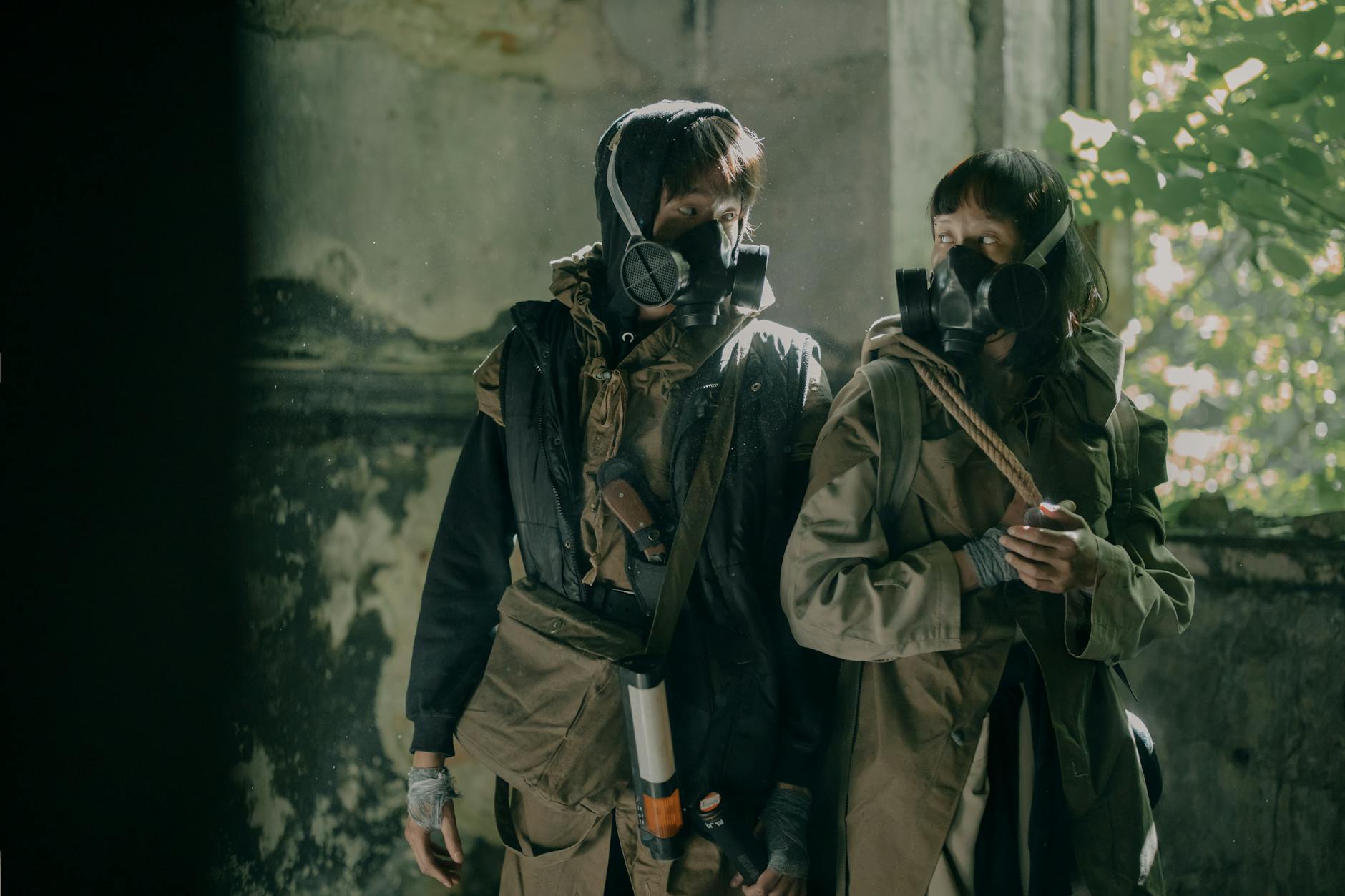
The fractured reality immediately hooks readers by exposing the flaws of the world the character inhabits. It also presents contrasting ideologies or power structures, forcing both the hero and the audience to question which side, if any, is truly right. In these stories, heroes are not always chosen by fate or prophecy. More often, they are individuals who are simply tired of oppression, injustice, or the status quo.
Rather than being summoned, the hero is stirred by disillusionment or a deep desire for change. A great example of this can be found in The Expanse series, when James Holden broadcasts the supposed Martian attack on the Canterbury and the mysterious death of the crew aboard the Scopuli. Holden’s belief that information should be free and that those responsible must be held accountable reflects a deeply personal call to action. His journey begins not with destiny, but with a moral decision born from the fractured reality he inhabits.
The Cosmic Mentor
As the hero is thrust into the conflicts and challenges of a fractured world, they often encounter a mentor figure. While this mirrors the classic Hero’s Journey, the mentor in speculative fiction frequently acts as a minor antagonist to the protagonist’s immediate goals. This is because speculative fiction often explores worlds that are far from ideal, places where truth is murky, and survival comes with compromise.
The mentor is typically jaded, shaped by past failures, and seeks to prevent the hero from repeating their mistakes. Rather than offering pure wisdom or unconditional support, the Cosmic Mentor, whether a robot, alien, or even the protagonist’s future self, may mislead or manipulate the hero in an attempt to steer them down a safer path.
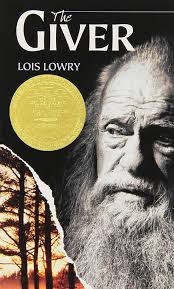
A powerful example of this appears in The Giver, where the old Giver withholds certain knowledge from Jonas after witnessing the emotional toll it took on the previous Receiver. This withholding creates a deeper set of trials for both characters, with consequences that ripple through the story’s climax and resolution.
Ultimately, the Cosmic Mentor is just as essential to the speculative Hero’s Journey as the traditional mentor is to Campbell’s model. Though they may appear in unfamiliar forms and operate with more ambiguity, they play a vital role in shaping the hero’s growth and the story’s thematic depth.
The Paradoxical Return
All journeys must end, and in speculative fiction, the hero still returns changed, but not always in the way classic tales would have it. Instead of returning with clarity or peace, the hero often comes back with a more complex, even pessimistic, understanding of the world. The journey has shattered old beliefs, exposed harsh truths, and demanded sacrifices that cannot be undone.
The protagonist must now reconcile with the choices they made along the way. The cost of survival, knowledge, or transformation often weighs heavily. Whether it’s the loss of companions, the compromise of ideals, or the realization that the world cannot be easily fixed, the return is rarely celebratory.
The “elixir”, the insight, technology, or power the hero brings back, is not always welcomed. In many speculative stories, the world resists change. The hero may be seen as a threat, a heretic, or a destabilizing force. The very thing they fought to obtain might be rejected, misunderstood, or weaponized by those in power.
This resistance adds a last layer of conflict: the hero must decide whether to fight for the change they believe in, hide what they’ve learned, or walk away entirely. The return becomes not just a conclusion, but a reckoning, with the world, with others, and with themselves.
Author Spotlight: Matt Dinniman
I chose to spotlight Matt Dinniman this month after reading his best-selling book, Dungeon Crawler Carl. He’s a fantastic author with a lot to teach us about adapting the Hero’s Journey to speculative fiction, even if he didn’t set out to do that intentionally.

If you visit the About page on his website, you’ll find:
“Matt Dinniman is a writer and artist from Gig Harbor, Washington. He is the author of the best-selling Dungeon Crawler Carl series along with several other books about the end of the world. He doesn’t really hate Cocker Spaniels, and he plays bass in two bands.”
That bit about the Cocker Spaniel offers a perfect glimpse into the kind of humor you’ll find in Dungeon Crawler Carl, dry, absurd, and unexpectedly endearing.
Dinniman is known for his use of dark humor, satire, and genre blending. His voice is distinct and immediately recognizable, thanks to his sharp wit and willingness to push narrative boundaries. Common themes in his work include survival, identity, resistance to authority, and the absurdity of systems—all of which align beautifully with the evolving structure of the speculative Hero’s Journey.
Key Works
Dungeon Crawler Carl Series
The Dungeon Crawler Carl series follows Carl, a Coast Guard veteran, and Princess Donut, his ex-girlfriend’s cat, as they navigate a bizarre and dangerous intergalactic game show where Earth has been transformed into a massive dungeon crawl. The series is a comedic take on the dungeon-crawling trope, where Carl and Princess Donut must survive a variety of challenges, traps, and monsters while being watched by alien viewers.
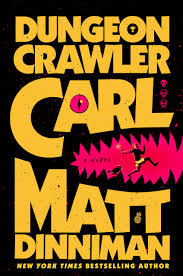
- Dungeon Crawler Carl (Book 1)
- Carl’s Doomsday Scenario
- The Dungeon Anarchist’s Cookbook
- The Gate of the Feral Gods
- The Butcher’s Masquerade
- The Eye of the Bedlam Bride
- This Inevitable Ruin
Other Notable Works
- Kaiju: Battlefield Surgeon
- Dominion of Blades
Hero’s Journey Alignment
Today we’ll only be looking at the first book of the Dungeon Crawler Carl series, as that’s the only one I’ve read. It still offers a great insight into adapting the Hero’s Journey to speculative fiction. We’ll go through the categories I mentioned above.
The Fractured Reality
Dungeon Crawler Carl opens with a jarring in medias res moment, immediately throwing readers into a world already shattered. Shortly after, the narrative rewinds just far enough to provide context, revealing how quickly and violently the world fell apart. This structure reinforces the suddenness of the fracture and immerses the reader in Carl’s disorientation.
What makes this fractured reality so compelling is its tonal duality. Dinniman balances traumatic, apocalyptic events with sharp, often absurd humor. This contrast not only sets the tone for the rest of the book but also mirrors Carl’s own coping mechanisms as he navigates the chaos.
Carl’s fractured reality isn’t just a backdrop, it’s the catalyst. The collapse of the world as he knew it forces him into a new, gamified existence. Interestingly, he’s given a choice: remain in the ruins of the old world or enter the dungeon. His decision to step into the unknown marks the beginning of his journey, not as a chosen one, but as someone simply trying to survive, and maybe, eventually, to fight back.
The Cosmic Mentor
Mordecai embodies the Cosmic Mentor archetype from the moment he appears. Introduced as a minor antagonist, he immediately sets himself apart from the traditional wise and supportive guide. In the story, he serves as a Game Guide, a role that should imply helpfulness, but in Mordecai’s case, comes with a heavy dose of reluctance and sarcasm.
He’s a grumpy, rule-bound employee of the Borant Corporation, exuding the energy of a disgruntled veteran. This characterization is especially effective given that Carl himself is a Navy veteran. The dynamic between them feels authentic, veterans often respond best to others who share their blunt, no-nonsense communication style. This makes Mordecai a surprisingly effective mentor, even if he’s not always cooperative.
At first, Mordecai refuses Carl’s requests for help, citing corporate policy and protocol. When he finally agrees to serve as their guide, he offers only the bare minimum, just enough information to keep Carl and Princess Donut alive. His reluctance stems from centuries of serving as a guide in a system he clearly despises. This jaded attitude is a hallmark of the Cosmic Mentor: someone who has seen too much, lost too much, and now operates with a kind of weary detachment.
Mordecai doesn’t inspire Carl with grand ideals. Instead, he reveals the darker truths of the world Carl now inhabits. His mentorship is not about hope, but about survival, and that makes him a perfect fit for the speculative Hero’s Journey.
The Return and Rejection
Dungeon Crawler Carl doesn’t end with a return to the hero’s original world. Instead, it ends with the realization that the dungeon is Carl’s world now. This diverges from the traditional Hero’s Journey, where the hero returns home transformed. Carl isn’t going home, at least, not anytime soon. And in speculative fiction, that’s perfectly fitting. The fractured reality either makes returning impossible or undesirable. In Carl’s case, it’s the former.
Throughout the story, Carl gains knowledge, skills, and a deeper understanding of the dungeon’s brutal system. But this “elixir” doesn’t bring resolution or reward. In fact, the more competent Carl becomes, the more the alien overlords behind the game work to suppress him. Heaven forbid the man gets a decent pair of pants.
In this version of the Hero’s Journey, the elixir is both knowledge and life itself, something Carl fights to preserve. But the system isn’t designed to reward growth; it’s designed to entertain. The overlords want to control the pace of both knowledge and survival to keep their audience engaged. Carl’s refusal to play by their rules doesn’t earn him glory, it earns him punishment.
This rejection of the hero’s growth by the world around him is a hallmark of the speculative Hero’s Journey. It’s not about returning to a place of peace, it’s about surviving in a place that resists change, and continuing to fight anyway.
Writing Exercise: Fractured Reality Opening
Practice opening your story in a “fractured reality” instead of an ordinary world.
Instructions:
- Set your timer for 15 minutes
- Choose a speculative setting (post-apocalyptic, space station, magical realm, etc.)
- Write an opening scene that drops your protagonist into a world that’s already broken, unstable, or morally complex
- Focus on showing the fracture through concrete details, not exposition
- End with your protagonist making a choice that will pull them deeper into the conflict
Key Elements to Include:
- At least one detail that shows the world is “wrong” or broken
- A hint of the larger conflict or system causing the fracture
- Your protagonist’s emotional reaction to their circumstances
- A moment where they must choose action over passivity
Bonus Challenge: Include a moment of dark humor or absurdity that shows how your protagonist copes with the chaos (like Dinniman does with Carl).
Reflection Questions (after writing):
- How does starting in a fractured reality change the pacing compared to a traditional “ordinary world” opening?
- What does your protagonist’s reaction to the broken world reveal about their character?
- How might this opening set up a different kind of mentor or guide than the traditional wise helper?
Upcoming Events
None of these are affiliate links, just events that I think you might find useful.
Writing Workshops (WritingWorkshops.com):
- Crafting Magical Realism: Myths & Magic in Modern Fiction (Starts August 6, 4 weeks, Zoom)
- Opening Lines, Tone, and Tension: First Pages (Starts August 7, 3 weeks, Zoom)
The Writers Studio Online:
- Online Level 1 Intro to Fiction and Poetry (Ford) (Starts August 11, 8 weeks, Zoom/Google Meet)
Sarah Lawrence College Writing Institute:
- Fiction Workshop with August Thompson (July 10 – August 14, Thursdays, Zoom)
Resource Roundup
Articles:
- “Writing 101: What Is the Hero’s Journey?” (MasterClass)
A concise breakdown of Joseph Campbell’s 17 steps of the Hero’s Journey, with examples and practical advice for writers working in any genre, including speculative fiction. - “The Hero’s Journey in Sci-Fi & Fantasy” (Number Analytics)
This article explores how the Hero’s Journey is adapted and subverted in both science fiction and fantasy, with examples from Star Wars, Dune, The Lord of the Rings, and Harry Potter. It also discusses the impact of technology and world-building on the journey’s structure. - “Breaking Down the Hero’s Journey Plot Structure” (Well-Storied)
An accessible guide to the Hero’s Journey, including examples from classic and modern speculative fiction, and tips for adapting the structure to your own work.
Videos:
- “The Hero’s Journey: The Call, The Refusal, and The Mentor” (YouTube)
A clear, step-by-step explanation of the early stages of the Hero’s Journey, with practical storytelling lessons for writers and creators. - “How to Use The Hero’s Journey to Structure a Novel” (YouTube)
Explains the 12 stages of the Hero’s Journey and demonstrates how to apply them to your own speculative fiction or fantasy novel. - “How To Write A Speculative Science Fiction Story” (PlanetSpark TV)
Offers tips on world-building, character creation, and integrating speculative elements within a story structure, with advice tailored to writers new to the genre.
Conclusion
The Hero’s Journey isn’t dead, it’s evolving right alongside the stories we tell. Whether you’re writing about starships or sorcery, the key is recognizing that modern speculative fiction demands a more complex, nuanced approach to this timeless structure. Your heroes might start in fractured realities, learn from mentors who mislead them, and return with truths that the world doesn’t want to hear. That’s not a flaw in your storytelling, that’s the reality of the worlds we’re creating and the stories our readers crave.
So grab your favorite speculative fiction novel, identify how it adapts the Hero’s Journey, and then apply those insights to your own work. Your future readers are waiting for heroes who reflect the complexity of the worlds they inhabit.
Previous Post: Dragon Day Book Review
Next Post: Character Arcs: Aligning Personal Growth with Plot
Next Newsletter: August
Discover more from Kenneth W. Myers
Subscribe to get the latest posts sent to your email.
 Kenneth W. Myers