

- Welcome, Authors of Tomorrow
- The Art of Plot and World-Building: A Guide to Seamless Integration
- Author Spotlight: J.A. Andrews
- Writing Exercise: World-Building and Plot Integration Exercise
- Conclusion
- Writing Update
Welcome, Authors of Tomorrow
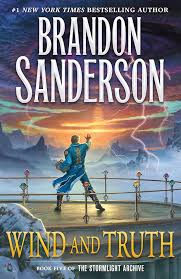
Welcome to 2025 Authors of Tomorrow! I hope your first seven days of the year have jump-started your annual, monthly, or daily goals. The energy at the start of the year isn’t lost yet, so if you still need to start, it’s time to begin today! Has anyone else read Brandon Sanderson’s latest novel in the Stormlight series? Let me know if you’re reading or have read Wind and Truth.
I want to take a quick moment to introduce the focus of this year’s mastery topic. 2025 will help you master plot and structure. Creating the framework for your story is important as it supports, blocks, and drives your character through the ups and downs of fiction. Today’s post will teach you about World-Building and Plot Integration.
The Art of Plot and World-Building: A Guide to Seamless Integration
Introduction:
Imagine stepping into a world where the story builds upon itself in a logical flow and gives you everything you need for your journey without realizing it. Now, imagine writing that type of story. What do you imagine these stories having? Because I know you can do it more than once. While this sounds amazing, you need to know the tools that will help you reach this goal. World-building and Plot integration are integral to your story’s sense of fullness and structure.
What Details to Include:

To properly integrate world-building and plot, you’ll want to ensure you include key elements like characters, worlds, magic systems, and foreign creatures. These can serve as great hooks for readers if presented effectively. However, integrating them into key plot points without them seeming out of place requires some finesse. Here are a few questions you can ask yourself during the writing process to determine if a world-building detail is necessary at that moment or can be introduced later:
- Does this detail enhance the scene, the reader’s understanding, and the character’s journey?
- If this detail is foreshadowing, what is the most natural way to introduce it into the story here?
- Is this information for me as the writer, or is it for the readers?
These questions can act as quick self-checks to help you keep your book lean and avoid overwhelming readers. This approach will also assist with the next part of the process: avoiding info-dumping.t info-dumping.
How Not to Info Dump:
Integrating world-building and plot is anything but info-dumping, yet it’s a common issue in early drafts, even for experienced writers. The early drafts are your opportunity to get as much information down as possible. Then, it’s up to you to refine that mass of rock and flecks of gold into pages, paragraphs, or even sentences that glimmer in the reading light.
Begin your refining process by asking the same questions you considered in the “What Details to Include” section. Once you’ve trimmed your content, it’s time to examine the scene level. Here are the next level questions to consider:
- How do these world-building details align with my scene and/or plot goals?
- Are any of these details repetitive or unnecessary for the scene and/or plot?
- Does this detail have to appear here, or would it be more impactful in another scene?
Considering these questions will help ensure you’re giving the reader only what they need. While readers may say they want more, they usually appreciate it after they’ve finished your story. This is when you can add world-building information into newsletters and special short books based on readers’ interests. All of this will help you integrate world-building seamlessly into your plot.
How World-Building Integrates into Plot:

While they may seem like two separate elements at first, world-building and plot work best when they’re intertwined. When world-building enhances the plot and vice versa, your story is more likely to keep readers engaged. Why? Because when a world-building detail—such as a mountain in the distance with massive pitch-black crags—appears in the hero’s journey, it adds a promising decision point, challenge, and obstacle for the character to engage with. If you’re going to point out this mountain to your readers, they will expect the character to encounter it at some point.
Conclusion:
How are your worlds looking now? Take your time answering the questions above and study the books you love. Success leaves clues, and there are many books you can use to find good and bad examples of each of these sections. By focusing on these topics, you can enhance your world-building and plot integration in your story. Writers are always developing their skills, so don’t expect to get it perfect the first time. Keep refining and learning, and your stories will shine brighter with each draft.
Act Now:
What do you struggle with most when integrating world-building into your plot? Share your thoughts in the comments below. Let’s learn and grow together!
Author Spotlight: J.A. Andrews
About the Author
To start off, there are a couple of different J.A. Andrews authors, so I’ve linked to her website to make sure you find the right one.
J.A. Andrews is an author I recently discovered through her trilogy on Audible. I’m sad it took me this long to find her since she started publishing books in 2017, with her contribution to Still Waters: A Noblebright Fantasy Anthology. Although I’ve only read her Keeper’s Origins Trilogy so far, I can confidently say I’m a fan. The way she masterfully integrates world-building and plot can serve as a great study for today’s post.
J.A. Andrews is a fantasy author with a great knack for structure. Her complex characters and well-structured novels offer readers an engaging slow-burn epic fantasy series. The Keeper’s Origins Trilogy doesn’t have many flat characters sticking to the pages. By flat, I mean characters that are only two-dimensional and serve only a plot purpose. J.A. Andrews clearly took the time to make each character matter, giving them complete roundness.
The opening of this series sets the tone for the characters you can expect. Sable, the protagonist, states that there are things you can steal and no one will care about, and things that people will go to the ends of the earth for. While this is a summary from my memory of listening to the audiobook, it captures the essence. Andrews uses Sable’s point of view to show readers what to expect from the book, ensuring that each character has driving forces and depth.
Another great feature of this trilogy is the use of a playwright and a traveling acting troupe. Through them, you get a layered sense of structure for the individual books and the trilogy. The mention of these structures throughout the story doesn’t feel heavy-handed, but serves as a satisfying reassurance that the reader is on the right path. While this technique might not work with every book, it added a fresh perspective to the fantasy genre that I haven’t found in a while.
So if you’re looking for a slow-burn epic fantasy story, check out The Keeper’s Origins Series! I look forward to exploring more of her books and hope you can learn some useful skills from her as well!
Let me know in the comments if you’ve read anything from J.A. Andrews and what your favorite was.
Writing Exercise: World-Building and Plot Integration Exercise
It’s time to practice what we’ve gone over today. I’ve designed this to be a 15-minute exercise, but I understand everyone works at different paces. The goal is to complete the exercise, even if you take a few sessions.
Prompt:
Your main character is traveling through a desert landscape. As they trudge along, they notice something in the distance—an unusual geological formation that seems out of place in the arid environment.
Questions to consider as you write:
- What does this geological feature look like? How does it stand out from the surrounding desert?
- Why is this feature significant or intriguing to your character? Does it represent a potential obstacle, resource, or clue about the world?
- How does this world-building detail advance the plot in a natural way? Does it pose a challenge, provide an opportunity, or foreshadow future events?
- What sensory details can you include to make the world and the character’s experience of it more vivid for the reader?
- How can you weave in relevant background information or context without info-dumping?
Center your scene on organically weaving world-building elements into your character’s path and the unfolding plot. Don’t worry about providing a full story arc—just aim to showcase seamless world-building within a single scene.
When the 15 minutes are up, review what you’ve written. Consider how you can further refine the integration of world-building and plot based on the questions above. This exercise is about practice, so don’t be afraid to revisit and rework the scene.
The goal is to train your instincts for crafting a cohesive, compelling story world that feels essential to your plot progression. With regular practice, you’ll develop a stronger sense of how to balance world-building and narrative in a way that captivates readers.
Here is my go at the exercise. Please know that this is just like any other exercise and made up on the spot. I will not say it’s the perfect example, but what I got from this exercise. Please read it if you’d like, otherwise, good luck on your own!
Antor lifted another foot, shoe filled with sand, that fell with a heavy thud in the desert night. Three days had passed hiding in the personal cooling tent now that he was alone. As the moon set on the horizon a strange object obscured the roundness of the moon. The structure a long rectangle gleamed in the moonlight as if a polished metal. Antor wondered if that was the abandoned base he was in search of.
Ignoring the weight of each step increasing, Antor fought he burn in his legs as he pushed the final stretch to the building. Excitmenet welled up in him as he realized that he might be the first to reclaim the lost research of the forgotten sciences. Then he could find a way to survive long enough to go back and get the rest of his team, to save her. Maybe they’d have medicine inside. As he drew nearer though, the structure appeared smoother than it should have. Even in the silver moonlight, the reflection didn’t shift from window to window. Though he did feel the heat starting.
Behind him rose the three suns, always a perfect distance apart, of Talomen, and his days travel would end where he stood. Sweat dripped down his back as he pulled out the personal cooling tent and buried it in the sand. With a press of a button on his arm control pad there was a soft thwump of the tent expanding under the sand. Antor’s water sensors dropped faster than he hoped and the world around his started to spin. He fell into the tent’s opening and it self sealed behind him. Antor gasped as his water reclamation status flashed red. He pulled the flask from his suit and drank what he’d lost.
A red light flashed on just above his face.
“Adventure log 399. The abandoned science station is in sight, but there’s something wrong with it. I’ve had to leave my entire crew behind and I’m worried it hasn’t been worth it.”
Resource Roundup:
In this section, I’ve curated a list of fantastic resources to help you delve deeper into world-building and plot integration. Whether you’re looking for inspiration, tools, or expert advice, these recommendations have got you covered.
- Books:
- “On Writing” by Stephen King: A classic guide that combines memoir and practical advice, offering insights into the craft of writing.
- “World-Building” by Stephen L. Gillett: An invaluable resource for creating detailed and realistic fictional worlds.
- Tools:
- Scrivener: A powerful writing software that helps you organize your drafts, research, and notes all in one place. Ideal for plotting and world-building.
- World Anvil: An online platform for writers to build and manage their fictional worlds. It offers tools for mapping, timelines, and character creation.
- Articles:
- “How to Identify and Remove Trivial Detail From Your Stories” from Jane Friedman: This article provides practical tips on weaving world-building elements seamlessly into your plot. Read it here.
- “6 Stages of Building a Story Within an Intricately Designed World” from Writer’s Digest: Explore strategies for making your world-building efforts serve your story effectively. Read it here.
These resources can help you improve your writing and make your stories more exciting.
Conclusion
In this issue, we’ve explored the art of integrating world-building and plot to create a seamless, immersive reading experience. To make your fantasy world feel real, ask yourself how each scene can be improved, avoid simply dumping information, and ensure every detail helps move the story forward.
Remember, world-building is not just for you as the writer – it should captivate your readers as well. So keep refining, keep learning, and keep sharing your insights in the comments below. I’m excited to see how you’ll bring your vibrant worlds to life through masterful plot integration. Keep working to become an Author of Tomorrow!
Writing Update
I’ve spent the last week working on more story outlines and started reading my draft of Please Subscribe that I sent to beta readers. I’ve realized I should have taken more time cleaning it up, and I trusted but didn’t verify my editing software. There are errors that make me feel guilty for sending it out to people to read, but the feedback on the overall story is great. I’ve received some feedback that gives me hope, even in light of the rough sections of the story.
So, learn from me: if you’re using editing software, make sure you read it afterward. Computers are great, but they can still miss or mix things up.
I’ve got my ticket to LTUE and am checking the website daily to see when the Agent Pitch sessions post. How is your writing going in the new year?
Previous Post: Reflecting on a Year of Speculative Fiction Writing: Looking Back and Moving Forward
Previous Newsletter: December 2024
Next Post: Introduction to Plot and Structure: The Backbone of Storytelling
Next Newsletter: February 2025
Discover more from Kenneth W. Myers
Subscribe to get the latest posts sent to your email.
 Kenneth W. Myers
Nice post 🌅🌅
LikeLiked by 1 person
Thank you!
LikeLike
Welcome dear freind🌅🌅
LikeLiked by 1 person
Pingback: Introduction to Plot and Structure: The Backbone of Storytelling – Myers Fiction
Pingback: Myers Fiction February Newsletter 2025 – Myers Fiction