Introduction
Welcome, Authors of Tomorrow, to the November and the season of gratitude. I’ll get started with saying thank you to everyone who has subscribed, viewed, liked, and commented to the blog posts of Myers Fiction. This year has tripled our yearly views before the end of the year! It’s all thanks to you. I’ve considered giving up so many times, but thank you for your continued support as I try to help all of us become better writers. So thank you everyone who views this and any other posts.
Also, a quick author update. I just finished the third draft of my near future dystopian Please Subscribe! If you’d like to learn more, or would be interested in beta reading, visit the new page to learn more about it!

Now, let’s look at what this month’s newsletter will bring. We’re going to dive into the seventh essential of science fiction and fantasy, imagination and creativity. Though we focus a lot on the craft, sometimes we need to be reminded of what started us down the path of these genres. After that conversation, we’ll look at the author Neil Gaiman and how you can align books with certain times of the year.
Essentials of Science Fiction and Fantasy: 7-Imagination and Creativity
Many of us can remember the early science fiction or fantasy books that captured our imagination. For me it was always the Pendragon series by D. J. MacHale. Exploring different worlds and working to save all of them enthralled me. Your book might have been a standalone, or a series, but you all found something that drew you to explore the science fiction and fantasy realm. Science fiction and fantasy thrive on imagination and creativity, which bring to life captivating worlds, technology, and characters.
In genres defined by their ability to transport readers to new and wonderful lands, imagination and creativity are essential for pushing the boundaries. Science fiction and fantasy explore the extraordinary, not just the ordinary. These worlds created by science fiction and fantasy authors then need to match that extraordinary nature.

For many authors, science fiction and fantasy allow them to explore possibilities from the furthest depths of their imagination. This is important because it allows the author to make the impossible, possible. The readers then can believe in the impossible. The ability to believe drives readers on to draw their own parallels in life and hopefully come out the last page of your book more ready to face the world we hide from.
Science fiction and fantasy stories need imagination and creativity to feel unique and captivating. These genres thrive on innovative ideas that stretch reality and question common beliefs. Authors use their imagination to create detailed settings, complex characters, and intriguing plots. By adding creativity to the story, it becomes more interesting and prompts readers to imagine new possibilities and experiences, elevating the genre.
If a book doesn’t capture the sense of wonder and possibility that attracts readers, it can create a sizeable gap between the book and its audience. These words have a magical power that brings pages to life and captivates readers. It’s important to have these qualities to create captivating and inspiring works. They help form a strong connection with the audience and explore the limitless aspects of human experience.
Imagination and creativity aren’t just for the readers, but for you as the author. They allow you to break free from conventional tropes and explore your ideas that challenge many pre-established notions. Think of how many sub-genres in science fiction and fantasy we have today compared to a hundred years ago. As we continue to push the boundaries of what we want to explore, it opens up avenues to people who didn’t realize they wanted to explore those paths as well.
So practice pushing your imagination to the brink and then over the ledge. You can only know by exploring.
Science fiction and fantasy are incredible because they can make us dream and take us to extraordinary places. These genres challenge us to envision the impossible and explore the depths of creativity, both as readers and writers. We use the endless possibilities to create amazing stories and motivate others to dream big. Use your imagination to create captivating worlds that inspire, giving us the courage to face our own realities. If you can do this, you’re another step closer to becoming an Author of Tomorrow.
Author Spotlight: Neil Gaiman
Introduction:
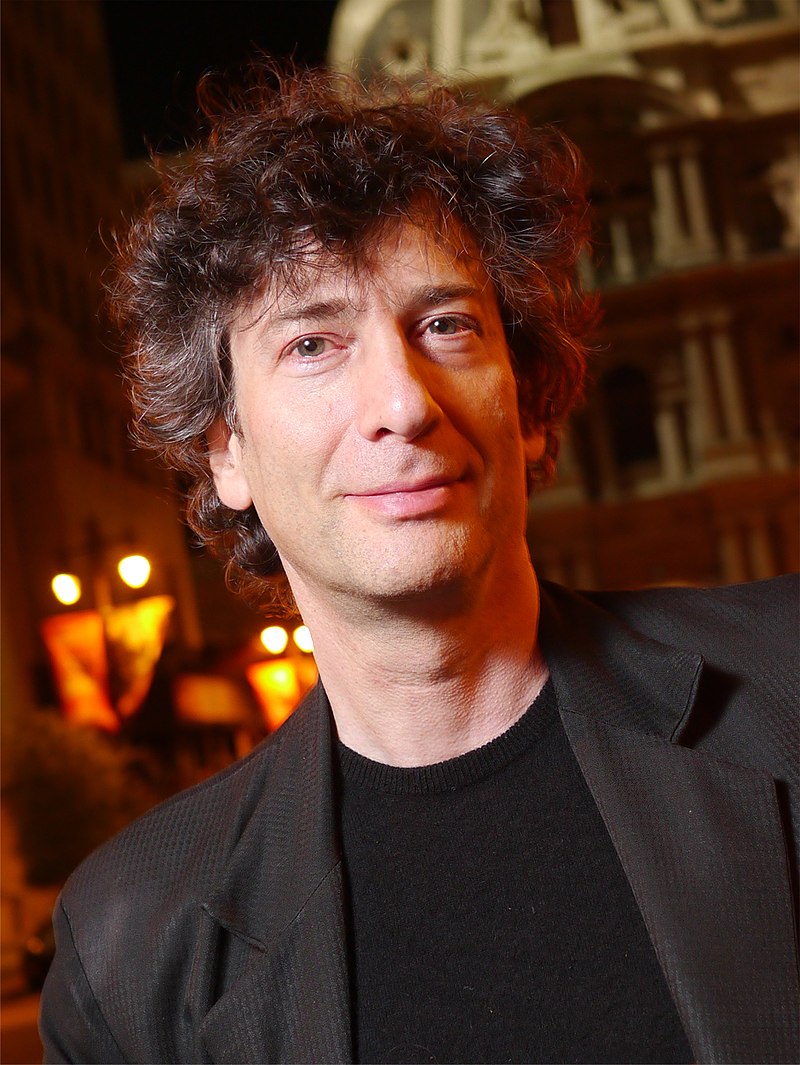
Neil Gaiman is a famous writer known for his complex stories that delve into themes of belief, culture, and personal growth. His stories blend fantasy and everyday life, creating a captivating world that challenges how readers see reality.
Neil Gaiman’s writing journey began early in the 1980s while he worked as a freelance journalist in the UK. The publication of a Duran Duran biography in 1984 is considered his first major break. But what brought him to the forefront of graphic novels and later into novels was a collaboration with Dave McKean on “Violent Cases.”
In 1989, Neil Gaiman started a comic series called “The Sandman” that combined mythology, horror, and fantasy in a captivating way. The series follows the character Dream, one of the Endless, who governs the realm of dreams and is portrayed with rich complexity and depth. Gaiman’s storytelling, along with beautiful artwork from talented illustrators, created a narrative that entertained and delved into deep themes like identity, love, and storytelling. With its unique approach and deep themes, “The Sandman” transformed comic books into a serious form of literature, earning widespread praise and enduring popularity.
Why Neil Gaiman for November?
In the 1990s and 2000s, Neil Gaiman wrote several fantasy books including “Neverwhere,” “Stardust,” “American Gods,” “Coraline,” and “Anansi Boys,” solidifying his reputation as a top author in the genre. The reason I’m recommending you read Neil Gaiman for November is that his book “American Gods” is a profound exploration of the blending of cultures, the loss and survival of traditions, and the undeniable power of belief that shapes identities and motivates actions.
These themes resonate deeply with the U.S. Thanksgiving season, a time when we reflect on gratitude, heritage, and the relationships that connect us to our past. “American Gods” explores the clash between old and new gods in America, showing how ancient beliefs still impact modern society, encouraging readers to reflect on what we value in a changing world. The novel reminds us to value and respect the diverse cultures around us through its complex story and symbolic elements.
In “Anansi Boys,” the book delves into family, legacy, and the intricate relationships that shape us. The story shows how love, betrayal, and duty can connect family members in complicated and emotional ways. The novel explores the importance of family connections and how our shared past and inherited traits can shape our lives and relationships.
Conclusion:
Neil Gaiman’s work stands as a testament to the power of imagination and creativity in storytelling. Readers are deeply affected by his stories because he expertly blends the magical and the ordinary, and delves into important topics like faith, heritage, and personal development.
During Thanksgiving, Gaiman’s books like “American Gods” and “Anansi Boys” make us think about the connections between gratitude, heritage, and relationships. Gaiman’s incredible storytelling captivates and entertains us, while also inspiring our imaginations.
Writing Exercise: Blending Worlds
Objective
To practice pushing the boundaries of imagination and creativity by combining elements from different genres, cultures, or time periods.
Exercise
Part 1: World-Building (15 minutes)
- Choose three elements from the following categories:
- A historical period (e.g., Victorian era, Ancient Egypt, Renaissance)
- A scientific concept (e.g., time travel, artificial intelligence, teleportation)
- A mythological creature or being (e.g., dragon, fairy, demigod)
- A futuristic technology (e.g., mind-reading devices, interstellar travel, virtual reality)
- A supernatural ability (e.g., shapeshifting, elemental control, telepathy)
- Spend 5 minutes brainstorming how these elements could coexist in a single world. What conflicts or synergies might arise?
- Write a brief description (100-200 words) of this world, focusing on how these elements interact and influence society.
Part 2: Character Creation (10 minutes)
- Create a character who embodies the clash or harmony between at least two of your chosen elements.
- Write a short character profile (50-100 words) describing their appearance, abilities, and motivations.
Part 3: Scenario Writing (20 minutes)
- Place your character in a situation that challenges their understanding of the world or forces them to confront the consequences of the melded elements you’ve created.
- Write a scene (300-500 words) that showcases the unique aspects of your world and your character’s place within it.
Part 4: Reflection (5 minutes)
- Review your writing and consider:
- How did combining different elements spark your creativity?
- What unexpected ideas or conflicts emerged from this exercise?
- How might you expand on this concept for a larger story?
Remember, the goal is to stretch your imagination and create something unique. There are no wrong answers in this exercise – let your creativity flow!
Conclusion
During this time of gratitude, let’s celebrate the imagination and creativity that drives our love for science fiction and fantasy. These genres allow us to discover new things, question our beliefs, and encourage us to dream.
Neil Gaiman’s works remind us of how belief, culture, and identity are intertwined, which is important to consider during this reflective time of year. As Authors of Tomorrow, let’s use our imagination to create captivating worlds that entertain and motivate readers to face their own realities with courage and a new outlook.
Remember, every word you write has the potential to open new doors of possibility for your readers. Keep pushing the boundaries of your creativity, for in doing so, you’re not just crafting stories – you’re shaping the dreams of tomorrow.
Essentials of Science Fiction and Fantasy Summaries
- World-Building and Why We Care
- Maintain consistency and immersion within the rules and logic of the world you’ve created. Ensure that the details, such as technology, magic systems, and societal norms, align with the established world-building elements. Contradictions or convenient plot choices that defy the world’s internal logic can break the reader’s suspension of disbelief.
- Craft a detailed and immersive world that serves as a foundation for characters and stories to unfold naturally. World-building elements like geography, culture, history, and systems of magic or technology should impact the plot, character actions, and thematic exploration. Well-developed world-building can create opportunities for conflict, character development, and thematic depth, while also providing an engaging escape for readers.
- Character Development and Connection
- Ground the narrative and provide an emotional connection for readers through well-developed characters. Characters serve as a lens through which readers experience and perceive the new worlds you’ve created. Fully fleshed-out characters with inner struggles, emotions, and unique perspectives help readers invest emotionally and make the fantastical elements feel real.
- Use characters to expand the reader’s understanding of the world and its complexities. Give characters contrasting viewpoints, opinions, and subjective experiences of the same world. This highlights different facets of the world-building and raises thought-provoking questions, enriching the reader’s immersion in the fictional universe.
- Plot Structure
- Plot structure is a key element in science fiction and fantasy writing. It helps build the world, develop characters, and keep the story flowing smoothly. It gives readers a cozy and familiar reading experience, even in unusual or magical settings.
- Try different plot structures to find what works best for their storytelling style, like Save the Cat or Three-Act Structure. When a plot is well-structured, it adds tension, conflict, and resolution to make the reading experience more satisfying and memorable.
- Theme Exploration
- Science fiction and fantasy let writers tackle complex ideas and provoke thought among readers, exploring larger questions about existence, technology, and society in a thought-provoking way.
- Well-crafted themes in a book give purpose to every word and can make the story more appreciated by challenging readers to analyze and discuss the world and future possibilities. This leads to more engaging and memorable works.
- Research Skills
- Research is crucial for effective world-building in science fiction and fantasy, providing a foundation of facts that lend authenticity and credibility to speculative worlds, as exemplified by Brandon Sanderson’s Mistborn series.
- While not all research may appear directly in the story, it enhances the writer’s confidence and understanding, leading to improved accuracy and consistency throughout the work, as illustrated by David Estes’ Kingfall Series and its magic system based on the Law of Conservation of Mass.
- Imagination and Creativity
- Science fiction and fantasy thrive on these qualities, allowing authors to create unique and captivating worlds, characters, and plots. These genres challenge both readers and writers to envision the impossible and explore new possibilities, making the extraordinary feel real and believable.
- These genres help form a strong connection with the audience by exploring deep, universal themes. They inspire readers to draw parallels with their own lives and face their realities with newfound courage, driven by the sense of wonder and possibility that these stories evoke.
Previous Post: Building Your Platform as a Speculative Fiction Author
Next Post: Networking and Finding Community as a Spec Fic Writer
Next Newsletter: December
Discover more from Kenneth W. Myers
Subscribe to get the latest posts sent to your email.
 Kenneth W. Myers
Pingback: Building Your Platform as a Speculative Fiction Author – Myers Fiction
Pingback: Myers Fiction October Newsletter – Myers Fiction
Pingback: Networking and Finding Community as a Spec Fic Writer – Myers Fiction