
Introduction
It’s that time to become an Author of Tomorrow. As you’ve been working through your year of mastering Science Fiction and Fantasy hopefully you’ve been working on your stories and the practice prompts in each post. You may, or may not, be at the point of publishing your work. One of the questions that I still constantly debate about is should I traditionally publish or Self-Publish.
Having Self-Published the wrong way, I can tell you that asking this question early on and doing the right research can have a huge impact on your book’s success. You want your decision to match your goals, lifestyle, and how you define success.
This is a long post, and I recommend using the table of contents to jump to the sections your most interested in. I’m trying to make sure you have all the details you’ll need to make the decision right for you. Start with the path you’re leaning towards and read that section.
First, let’s look at some definitions to make sure we’re all on the same page.
- Traditional Publishing:
- Traditional publishing refers to the conventional method of publishing books through established publishing houses. This process typically involves authors submitting their manuscripts to literary agents, who then pitch the work to publishing houses. If accepted, the publisher manages the editing, printing, distribution, and marketing of the book. Overall, traditional publishing has been the standard route for authors to bring their science fiction and fantasy works to a wide audience.
- Self-Publishing:
- Self-publishing refers to the practice of authors independently releasing their own works, bypassing traditional publishing houses. This avenue allows writers to maintain greater control over their content and its presentation, often leading to a more diverse range of speculative fiction for readers to explore.
Traditional Publishing
Traditional publishing is often seen as the holy grail of success for writers across all forms and genres. While it may have evolved from what we heard about growing up, it remains a strong option for writers pursuing this path. Let’s explore the usual steps, the advantages, and the challenges and considerations in traditional publishing.
Overview of the Traditional Publishing Process
These may not be exact, but most sources point to the following being the process you can expect from the traditional publishing route:
- Manuscript Preparation: Ensure your manuscript is polished and follows submission guidelines.
- Querying Agents: Write a compelling query letter and synopsis to attract a literary agent.
- Securing an Agent: If an agent is interested, they may request the full manuscript. If they love it, they’ll offer representation.
- Submission to Publishers: The agent submits your manuscript to editors at publishing houses.
- Contract Negotiation: If a publisher is interested, the agent negotiates the contract terms.
- Editing: The manuscript undergoes several rounds of editing (developmental, line, and copy editing).
- Design and Production: The book cover is designed, and the manuscript is formatted for print and digital versions.
- Marketing and Pre-Release: Marketing strategies are developed, including cover reveals, ARCs (Advance Reader Copies), and pre-release promotions.
- Publication: The book is released to the public and distributed to bookstores and online retailers.
- Post-Release Marketing: Continued marketing efforts to sustain sales and visibility.
I have heard from interviews with many modern authors that most of the marketing still falls on the author, unless you’re one of the publishing house’s top seller. But don’t let that dissuade you as you should have a literary agent that wants you to succeed because your success is their paycheck. Speaking of, let’s take a glimpse at the role of the person who should help you through this process.
Role of Literary Agents
Literary agents act as gatekeepers, filtering manuscripts and selecting those with the best potential. It’s important to remember that these agents are human. While they strive to be objective, subjectivity can come into play, especially when their livelihood is at stake. Many authors go through several agents before finding the right one. It’s almost like professional dating until you find the agent with the attributes you need to succeed.
Once you find the right one, literary agents go to bat for you by providing valuable editorial feedback and strategic advice to enhance your manuscript. In addition to negotiating contracts with publishers to secure the best terms for the author, they also assist in developing an author’s career, guiding them on branding, marketing, and overall industry navigation. Through their established connections in the publishing world, they can open doors to opportunities that might not be accessible otherwise, ensuring that authors receive the recognition and support they deserve for their work.
Beyond the business aspect, they often provide invaluable editorial feedback, guiding authors through the complex publishing landscape. Additionally, they act as a buffer between the author and the publishing industry, offering support and advocating for the author’s creative vision and long-term career interests. This partnership allows authors to focus on their writing while knowing that their professional representation is in capable hands.
Advantages of Traditional Publishing
Credibility and Prestige
Traditional publishing is often seen as the final validation authors need before they can confidently call themselves published authors. This credibility lends legitimacy to an author’s career, encouraging readers and publishers alike to take them more seriously.
The backing of a reputable publishing house provides authors with access to established distribution channels, promotional opportunities, and editorial support, significantly enhancing their visibility and reach.
The prestige associated with traditional publishing can open doors to speaking engagements, literary festivals, and other professional opportunities, further elevating the author’s profile within the literary community. The stamp of traditional publishing not only serves as validation but also brings numerous ancillary benefits that contribute to an author’s sense of accomplishment and standing within the industry.
Access to Professional Resources
Publishing houses are essentially book factories with access to internal and external tools to aid in your success.
Professional editors play a crucial role in elevating your manuscript to the highest quality. Through their expertise and keen attention to detail, they meticulously refine the content, structure, and overall coherence of the text. With their guidance, your work benefits from polished language, enhanced readability, and a more compelling narrative flow. Additionally, they ensure that the tone and style of the writing align with the intended audience, ultimately contributing to a more impactful and engaging final product.
Potential for Wider Reach
As with the connections above, traditional publishing offers a wider reach through established relationships with both physical and online bookstores. This ensures that your book is available in major retail outlets, making it easier for readers to discover your work. Additionally, traditional publishers provide access to high-quality translation services, allowing your book to be translated into multiple languages with precision and cultural sensitivity.
This extended reach helps you in several ways:
- Finding More Readers: By being present in a variety of retail spaces and online platforms, your book becomes accessible to a larger and more diverse audience. This increases the likelihood of attracting new readers who might not have discovered your work otherwise.
- Building a Fan Base: Consistent availability and professional marketing efforts by traditional publishers help in creating and nurturing a loyal fan base. Readers are more likely to follow and support an author whose books are easily accessible and well-promoted.
- Expanding Internationally: With high-quality translation services, your book can reach readers in countries where your native language is not spoken. This not only broadens your audience but also enhances your global presence as an author.
Overall, traditional publishing leverages its extensive networks and resources to maximize your book’s visibility and impact, helping you grow as an author both locally and internationally.
Challenges and Considerations
Lengthy Submission and Approval Process
The standard start-to-finish timeline for traditional publishing is two to three years. (Green Leaf Book Group) You could easily call this the long game of publishing. So, if your book is critical for current events, and you aren’t already established, you might want to look at the self-publishing process. Why does it take so long?
Most of this time comes from the edits, but you also have to keep in mind that publishing houses are businesses. They’re taking care of other books and other authors are going through the same struggles as you, though you may not be at the building to complain together. Also, if this is an earlier book, expect it to take longer as publishers often pick up say 12 books, one of those is going to make their budget that pays for your resources. You are still a priority, because they agreed to publish, but you’re a newer author and the resources prioritize to what gives them the best return on investment. It could also be the changing of the seasons.
Most publishers have a seasonal publishing schedule, releasing certain books at different times of the year. Think of movies. How many horror movies release in the September-October time frame compared to the rest of the year? Books follow similar patterns.
Lower Royalty Rates Compared to Self-Publishing
Up front this might sound like a bad thing, but it is true that the royalty rates are lower than self-publishing. On average you’re looking at the following rates for traditional publishing (dependent on publishing house and contract):
- Hardcover sales: 10% to 15% of the book’s retail price.
- Trade paperback sales: 7.5% to 10%.
- Mass-market paperback sales: Around 5%.
- eBook sales: Approximately 25%.
- Audiobook sales: Around 25%.
The above are linked to where I found this information. Just remember that this is dependent on when, where, and how you publish your book.
Though it seems like low numbers compared to self-publishing consider that many traditional publishing houses offer advance payments. The advances are recouped from the future royalties. You essentially get a paycheck for your work before it shows it’s success. Also, remember all those fancy services that help make your book beautiful? Those all cost the publisher current money, they can’t tell the editor thanks, but we’ll pay you once the book starts selling.
Creative Control Limitations
As mentioned before, the publishing houses are businesses. They have budgets, deadlines, and stakeholders to satisfy. The creative control limitations come from the publishers trying to make sure they create a successful product. These limitations from the author’s perspective come from:
- Editorial Changes: Traditional publishers have experienced editors who may suggest significant changes to a manuscript to improve its clarity, pacing, or marketability. Sometimes these changes are seen as deviating from the author’s creative vision even though they’re meant to help the book.
- Cover Design and Title: Authors can have input on the cover’s initial design, but most publishers will use market research and sales studies to land on a cover and title. Think of Harry Potter and the Philosopher’s Stone. In the United States, we know it as Harry Potter and the Sorcerer’s Stone. The term “Sorcerer” was thought to convey a stronger sense of magic and adventure, which would be more attractive to the target audience.
- Marketing and Positioning: The marketing strategies might not align with the author’s vision, or they have less influence on the strategy. Most publishers have dedicated marketing teams deciding how to promote the book and the overall branding.
- Contractual Obligations: Contractual obligations in traditional publishing can also limit your creative control. These contracts often include clauses that dictate various aspects of the publishing process. Deadlines and deliverables are strict, which can negatively impact your creative process.
Self-Publishing
Overview of the Self-Publishing Process
The steps for self-publishing your novel isn’t going to be much different in concept compared to the traditional publishing route. Everything a traditional author completes through the publishing house will need to be completed by the self-published author. You’re just going to have to foot the bill and invest in their book before they start making up the money it took to make it successful.
Steps from Manuscript Completion to Publication
- Manuscript Evaluation or Developmental Feedback
- Manuscript Evaluation: This is an initial response to your manuscript to ensure it’s cohesive and engaging. This can be done by beta readers or professional editors. The Manuscript evaluation is very high level and will let you know of any problem areas.
- Developmental Editing: A developmental edit focuses on structure, content, and flow of your book. The developmental editor is an specific kind of editor that only focuses on those aspects. They won’t worry about your grammar issues and sentence structure, though they may still give you some notes. The reason for this is that the structural edit should shift and change sections of your story. Don’t waste your time editing at the sentence level when you haven’t locked in the structure.
- Editing
- Structural/Developmental Editing: This will address major content issues, plot holes, and character development. This part takes place after you’ve received your initial feedback. You’re going to have to work through what you’re going to change and what you’ll keep the same. If you’re working with beta reader feedback, don’t try to fix each thing each beta reader identifies. Everyone reads differently. Look for the things that all beta readers called out as not working.
- Copy & Line Editing: Focuses on the sentence structure, grammar and consistency. This should be the second to last editing step you take. You’ve probably completed some early line edits before giving it to your beta readers and developmental editors. Now is the time to really crack down on those sentence level issues, hire a copy/line editor, and make those sentences pretty.
- Proofreading: Get one last run done on your manuscript to polish any remaining errors.
- Book Design
- Cover Design: Getting this done professionally can make a huge difference in your sales.
- Interior Formatting: You can do this yourself, just be ready for a tedious process. You’ll want to make sure you’ve formatted your book to look good in all formats. Look up guides online for advice on the program you’re using.
- Obtain an ISBN
- This unique identifier for your book allows you to sell it online and in stores. Most self-publishing services have a pathway for you to follow to get your ISBN.
- Formatting for Publication
- Do one last pass to format your manuscript for eBook, paperback, and hardcover.
- Publishing Platforms
- Choose where you want to publish your book. You can use one or multiple, depending on the platforms T&Cs. Make sure you check for exclusivity clauses like in Amazon’s KDP.
- Marketing and Promotion
- Develop a marketing plan for your book. This may vary by genre, book, or if it’s in a series. You can plan out social media posts, book launch events, and email newsletters to promote your book.
The self-publishing process can seem like a beast the first time you do it, but many authors find this as the most rewarding route to get their book out there.
Platforms and Tools for Self-Publishing
Below are some platforms you can use to help you publish and distribute your manuscript. I’ve added notes for services that I’ve used or looked into, but much of this is just research that I’ve compiled for you. The hyperlinks should take you to the websites to research each one.
- Amazon Kindle Direct Publishing (KDP):
- One of the most popular platforms, allowing you to publish eBooks and paperbacks. It offers a wide reach and various promotional tools. This was the tool I used for “Extoria” and it’s really user friendly. The hardest part was getting the cover to the right dimensions, because I designed my own.
- IngramSpark:
- Draft2Digital:
- Smashwords:
- BookBaby:
- Offers a range of services from editing to cover design and distribution. Warning: They send a lot of emails, so even if you’re just checking them out I would hold off on dropping any information until you’re sure you want to use them.
- Blurb:
- Kobo Writing Life:
- Apple Books:
Each platform has its own strengths, so you might choose one based on your specific needs, such as distribution reach, ease of use, or additional services offered.
Advantages of Self-Publishing
Complete Creative Control
As a self-published author, you have full control over your book. You control the storyline, characters, cover design, and interior formatting. You can fully realize your vision with no constraints. This is most often the reasons authors go from traditional to self-publishing their work. It’s a great option if you’ve got a large creative vision for how your book will look and read.
You also find that you have more flexibility to update things, which can significantly enhance the overall quality of your work. To keep your content relevant and engaging, you can always update it with new insights and feedback from readers. You can also update your cover design to attract a larger audience by reflecting current trends or adjusting the tone of your book. You can correct errors in your book, allowing you to maintain professionalism and prevent any potential confusion for your readers. This ability to make adjustments on the fly empowers you to create a refined piece that resonates well with your audience.
Higher Earnings Potential
- Royalty Rates:
- Self-publishing platforms like Amazon KDP offer higher royalty rates to traditional publishing. For example, Amazon KDP offers 70% royalties on eBooks priced with a certain range.
- Direct Earnings:
- Since there are no intermediaries like agents or publishers taking a cut, you keep a larger portion of the profits from each sale.
- One trick I learned here is if you purchase author paperback copies (when using Amazon KDP) you buy them at cost, and then can sell them at the same price as if they were online. Your ROI increases a lot! Though then you have to fight the storage factor depending on how many books you keep on hand.
- People also enjoy buying directly from the author, especially if they know you.
Faster Time-to-Market
Traditional publishing can be a lengthy process, involving extensive editing, marketing, and distribution efforts. This can be daunting for many authors who are eager to share their work with the world.
Self-publishing gives writers more control and significantly shortens the timeline for publishing. Once your manuscript is ready, you can publish it within days or weeks, making it possible to reach your audience quickly and efficiently. This speed enables authors to capitalize on trends and make instant improvements based on feedback, enhancing the reader’s experience and fostering a stronger connection with their audience.
You can make updates or corrections quickly without waiting for a new print run or publisher approval. This saves time and keeps your content relevant and accurate. This flexibility allows you to respond swiftly to feedback from readers or changes in information, enabling you to maintain a high standard of quality in your work. The ability to make real-time adjustments means that your published material can continuously evolve, reflecting the most current insights and developments in your field.
Challenges and Considerations
Responsibility for Editing, Cover Design, and Marketing
As a self-published author, you have a lot of responsibilities to take care of. Your readers aren’t just expecting your book to be finished, but to match the basic standards of traditionally published books. It’s up to you to make sure you get your book polished and error-free before the reader buys. This often means hiring professional editors for developmental editing, copyediting, and proofreading. Skimping on editing can lead to a subpar product that might turn readers away.
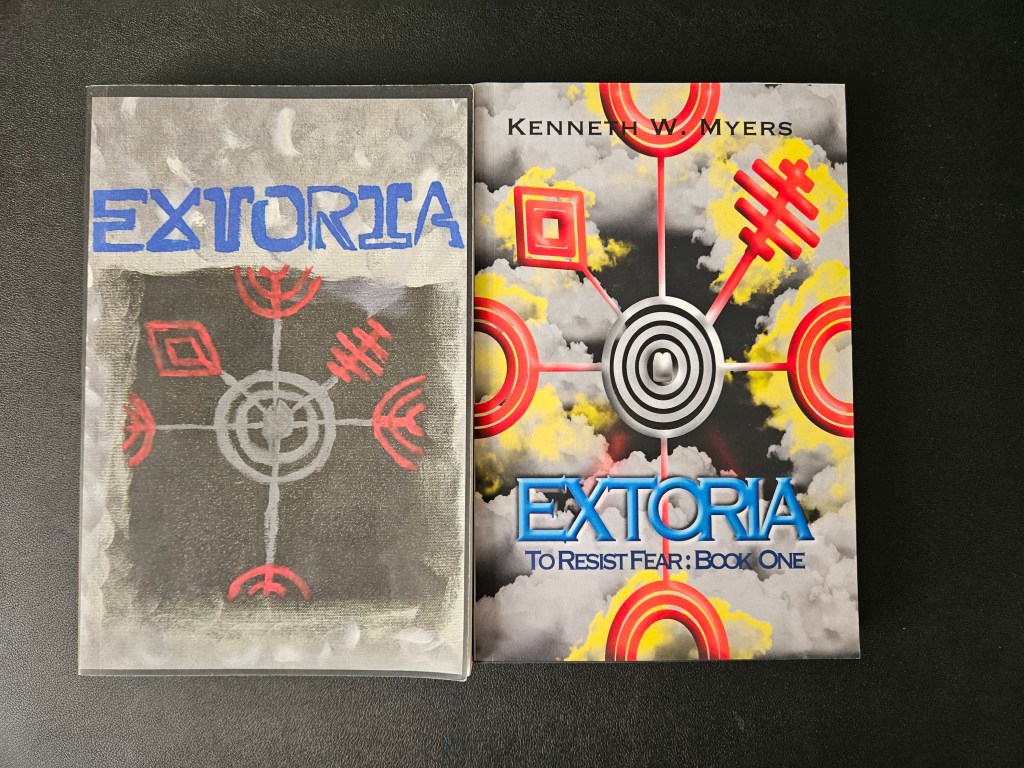
Cover design is another tremendous responsibility. Speaking from the experience of my cover designs for “Extoria”, get a professional book cover designer or hire a graphic designer. My very first cover for Extoria was one that I hand painted, took a photo of, and put as the front cover of my book. The second, I bought a graphic designing program and built it myself. It was better, but still nothing near what an experienced cover designer can provide for you.
Marketing is another challenging thing for many new authors to learn about. You’ll need to research and implement author platforms, engage with readers on social media, run ads, and organize book launches. Many of these skills don’t crossover with the writing process, which is what writers work on most. Effective marketing requires time, effort, and often a financial investment.
Initial Costs and Financial Risks
Self-publishing includes several upfront costs. The expenses for editing, cover design, formatting, and marketing can add up quickly for authors. There’s also no guarantee that you’ll get the expected return on investment (ROI) to not only cover those costs but also earn a profit. According to some sources, self-published authors rarely start earning a living until they have published at least six books.
Without the backing of a traditional publisher, all financial risks fall on you. If your book doesn’t sell well, you may not recover the money you’ve invested. It’s important to budget carefully and consider these risks before diving in.
Difficulty in Gaining Visibility and Credibility
If you go on Amazon right now and look up Science Fiction and Fantasy books, you’ll see that there are over 60,000 results. That’s a lot of books in the genres we’ve been talking about all year. The self-publishing market is highly competitive, with thousands of new books released every day. It’s difficult for new authors to get noticed and gain attention, especially without an existing audience. It’s not impossible, because if you know the right strategies and leverage trends, you can bring your book to the top of the listings.
Self-published books also face a stigma of lower quality than traditionally published books. To change this perception, you need to make a great product and get excellent reviews. Many self-published authors are doing this by hiring professional editors and book cover designers. Getting people to review your book is another great way to set it apart. Readers rely on the opinions of fellow readers to find books that aren’t as well established.
While Amazon KDP and IngramSpark offer wide distribution, getting your book in physical bookstores can be tough. Some bookstores are reluctant to carry self-published books because they worry about the quality and return policies. Look for smaller, local bookstores to start. Track everything, and then you can use that information as proof of ROI.
Deciding: Key Factors to Consider
Personal Goals and Vision
Aligning publishing choices with career aspirations:
- Self-Publishing: Offers complete creative control and faster publication timelines. Ideal if you want to maintain full ownership of your work and have a clear vision for your book’s presentation and marketing.
- Traditional Publishing: Provides validation and prestige, often with wider distribution and marketing support. Suitable if you aim for recognition within the literary community and prefer to focus more on writing than on the business side of publishing1.
Genre and Subgenre Considerations
How specific sci-fi and fantasy subgenres might fare better in one path over the other:
- Self-Publishing: Niche subgenres, like steampunk or grimdark fantasy, can thrive here due to the ability to directly reach and market to specific audiences. You can experiment with unconventional themes and styles without gatekeepers.
- Traditional Publishing: More mainstream subgenres, such as epic fantasy or space opera, might benefit from the broader reach and marketing muscle of traditional publishers. They can help place your book in major bookstores and libraries.
Time and Financial Investment
Evaluating the time commitment and financial implications of each path:
- Self-Publishing: Requires a significant upfront investment in editing, cover design, formatting, and marketing. However, you keep a higher percentage of royalties. The time commitment is also substantial as you handle all aspects of the publishing process.
- Traditional Publishing: The publisher covers most of the costs, but the process can be lengthy, often taking years from manuscript submission to publication. Advances are common, but royalties are lower compared to self-publishing.
Long-Term Career Planning
How each publishing choice might impact an author’s long-term career:
- Self-Publishing: Offers the potential for higher earnings per book and the ability to build a loyal reader base. It can be a good fit for authors who plan to publish frequently and want to retain control over their work.
- Traditional Publishing: Can provide a sound foundation for a long-term career with the support of experienced professionals. It may open doors to awards, speaking engagements, and other opportunities that can enhance your reputation and reach.
Ultimately, the best choice depends on your personal goals, the nature of your book, and how much time and money you’re willing to invest. Both paths have their unique advantages and challenges, so consider what aligns best with your vision for your writing career.
Conclusion
Choosing between traditional and self-publishing is a pivotal decision for science fiction and fantasy authors. Both paths offer unique advantages and challenges, from creative control and royalty rates to market reach and professional support. The best choice depends on your personal goals, genre considerations, time and financial resources, and long-term career aspirations. Whether you opt for the prestige and support of traditional publishing or the flexibility and control of self-publishing, success ultimately hinges on creating compelling stories, understanding your audience, and continually honing your craft as an author.
Previous Post: Integrating Folklore and Myth into Sci-Fi and Fantasy
Next Post: Building Your Platform as a Speculative Fiction Author
Discover more from Kenneth W. Myers
Subscribe to get the latest posts sent to your email.
 Kenneth W. Myers
Pingback: Building Your Platform as a Speculative Fiction Author – Myers Fiction