
- Introduction
- Essentials of Science Fiction and Fantasy: 6-Consistent Logic and Rules
- Author Spotlight-H. P. Lovecraft
- Writing Exercise: Maintaining Consistent Logic in Spooky World-Building
- Conclusion
- Essentials of Science Fiction and Fantasy Summaries
Introduction
It’s Spooky Season!
Let me know if you’re an author who likes to integrate the spooky into their science fiction or fantasy stories! I add folklore for different creatures into my fantasy stories because it adds some quick depth and fun to your story.

Well Authors of Tomorrow, it’s time to finish up the year strong. I hope you’ve been reaching your writing goals. We’re about to hit the challenging time of the year where our time is spread thin with holiday celebrations. It’s up to you to find the time to work on your stories to the extent you need to. Just know that here at Myers Fiction, I feel you on endeavoring the challenges of the holiday season. Take the small wins you can each day.
This month, we’ll focus on the sixth essential of science fiction and fantasy, consistent logic and rules. Consistency is key, and that’s something I’ll repeat until the day I die. Writing consistently, challenging yourself consistently, and growing your craft regularly is just as important in life as it is in your writing.
We’ll also explore a classic speculative fiction author, H. P. Lovecraft. Lovecraft is one of the earliest implementers of horror into science fiction.
Essentials of Science Fiction and Fantasy: 6-Consistent Logic and Rules
One thing can shatter an amazing story: inconsistency. It can cause readers to close books and leave them on the shelf, intending to finish later when they’re more up for the task. Inconsistency is the killer of many good books, disrupting the flow and deterring readers from returning to a series, and possibly the author. There’s a certain concern in people’s eyes when they point out inconsistencies in your writing. I’ve been there. It’s almost like doubt, but much worse. Science fiction and fantasy stories need consistency because so much of the story is based on believability. Without a consistent logic and rules framework, readers may struggle to immerse themselves in your story world.
While readers delve into science fiction and fantasy, their beliefs can sometimes question the limitless possibilities. There is only so much a human mind will accept before it says, “yeah right.” I like to compare this to the time I went on stage at a hypnotist’s show to be hypnotized. I wanted to believe I was close to being hypnotized, but then he challenged something that became an inconsistency in my mind. He said that my hands were glued together and I couldn’t break them apart. The first thought that came to my mind was that, of course, I could break my hands apart. My grip wasn’t so strong that it would never break. Your readers will most likely have similar thoughts if you are inconsistent or don’t follow your own rules.

It’s important to set clear rules and boundaries. They not only help keep the creative beast of a mind you carry in check, but also maintain coherence and credibility. Nothing looks worse for an author than for their knowledge to falter at critical moments. If the writer appears to be uninvested in their writing, the reader will be less likely to invest in the story and its characters. Clear rules and boundaries give a sense of safety to the readers. They know that there is only so much a world can contain and are less likely to enter worlds where too much is possible.
Establishing the consistent logic and rules of your world is crucial for ensuring the coherence and believability of your setting. By defining clear parameters for how things work, whether it’s the functioning of advanced technologies, the intricacies of magic systems, or the organization of societal structures, you create a solid foundation for your world-building endeavors. This foundation not only helps you maintain internal consistency but also allows for the organic growth and exploration of various aspects of your world. It enables you to delve into the implications of different technologies, the intricacies of magic interactions, and the dynamics of societal hierarchies, adding depth and richness to your creative work. With a well-established framework, you can weave together compelling narratives and engaging experiences that resonate with your audience.
Author Spotlight-H. P. Lovecraft
In honor of the Halloween season, I wanted to celebrate a writer known for his unique blend of horror, science fiction, and fantasy. Often referred to as a “weird fiction” author, Howard Phillips Lovecraft (1870-1973) was born in Providence, Rhode Island, but spend most of his life in New England.

At three years old, Lovecraft experienced instability and tragedy as his father was institutionalized and his mother battled mental health challenges. Despite the challenges he faced, Lovecraft developed a fascination for literature and science.
Lovecraft’s literary career began in 1910, but he didn’t gain much recognition until the 1920s/1930s through his publications in Weird Tales, a pulp fiction magazine. He is most known for “The Call of Cthulhu,” “At the Mountains of Madness” and “The Shadow over Innsmouth.” These stories explored ancient/powerful beings, forbidden knowledge, and atmospheric setting. With that in mind, it would make sense that the aspect of science that most intrigued Lovecraft was astronomy. With that vastness of the unknown and only hypotheticals beyond what technology can reach, we’re left wondering what’s really out there at the far stretches of the universe.
Lessons for the Science Fiction or Fantasy Writer
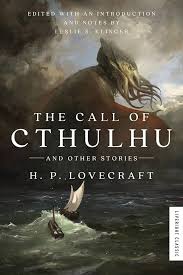
- World-building: Lovecraft’s creation of the Cthulu Mythos is a masterclass in world-building. You can learn to develop intricate, interconnected settings that add depth to your story.
- Atmosphere and Mood: Lovecraft’s ability to evoke a sense of dread and unease is unparalleled. Focus on creating a strong atmosphere to immerse readers in your world.
- Blending Genres: Lovecraft seamlessly combined elements of horror, science fiction, and fantasy. Experiment with genre blending to create unique and compelling narratives.
- Exploring Big Ideas: Lovecraft’s cosmicism challenges readers to think about humanity’s place in the universe. Don’t shy away from tackling profound themes in your writing.
- Character Reactions: Lovecraft’s characters often face unimaginable horrors, and their reactions drive the story. Use your characters’ responses to extraordinary events to add emotional depth to your narrative.
Lovecraft’s work offers valuable lessons on crafting captivating and thought-provoking stories.
Are you a Lovecraft fan? If so, what’s your favorite story of his?
Writing Exercise: Maintaining Consistent Logic in Spooky World-Building
Create a small, eerie world with a unique supernatural element or cursed technology, then explore its implications and maintain consistency throughout a short, spooky narrative.
Step 1: Establish Your Haunted World’s Core Rules (15 minutes)
- Choose either a supernatural phenomenon (e.g., ghost manifestations, werewolf transformations) or a cursed technology (e.g., a haunted social media app, a possessed AI).
- Define 3-5 clear, specific rules that govern how this supernatural element or cursed technology works.
- List 2-3 limitations or drawbacks to encountering or using this supernatural force.
Step 2: Explore Spine-Chilling Implications (10 minutes)
- Brainstorm how these rules might affect a small town, a specific family, or a group of friends during Halloween season.
- Consider potential loopholes or ways people might try to exploit or resist these supernatural forces.
Step 3: Spooky Character Creation (10 minutes)
- Create two characters: one who is deeply affected by the supernatural element/cursed technology, and one who is skeptical but gradually being drawn in.
- Give each character a Halloween-night goal that involves confronting or utilizing the supernatural force.
Step 4: Write a Chilling Scene (20 minutes)
Write a 500-word scene set on Halloween night where these characters interact, showcasing how the supernatural element/cursed technology manifests and how it affects their lives or goals. Ensure that all eerie occurrences and consequences align with the rules you established.
Step 5: Consistency in Terror Check (10 minutes)
- Review your scene, checking for any accidental rule-breaking or inconsistencies in your supernatural logic.
- If you find any, revise the scene to maintain consistency while preserving the spooky atmosphere.
- If you don’t find any, try to add one more complex manifestation of your supernatural element that pushes the boundaries of your established rules without breaking them, amplifying the horror.
After completing the exercise, consider:
- How did establishing clear rules for your supernatural element help create a consistent atmosphere of dread?
- Were there moments where you were tempted to break your own rules for a bigger scare? How did you handle this?
- How might you expand this supernatural system for a larger horror narrative while maintaining consistency?
Remember, the goal is to create a cohesive and terrifying world that follows its own internal logic, much like Lovecraft did with his cosmic horrors. This skill will help create more immersive and believable spooky stories in the science fiction and fantasy genres.
Conclusion
Maintaining consistent logic and rules in your science fiction and fantasy writing is crucial for creating immersive and believable worlds. As we’ve learned from H.P. Lovecraft’s work, a well-crafted system of supernatural or technological elements can elevate your story and keep readers engaged.
By establishing clear boundaries, exploring the implications of your world’s unique features, and rigorously checking for consistency, you can create rich, captivating narratives that resonate with your audience. Remember, the most memorable stories are those that follow their own internal logic, no matter how fantastical.
So, embrace the challenge of world-building, set your rules, and let your imagination soar within those boundaries. Happy Halloween, happy writing, and may your stories be as consistent as you work to become an Author of Tomorrow!
Essentials of Science Fiction and Fantasy Summaries
- World-Building and Why We Care
- Maintain consistency and immersion within the rules and logic of the world you’ve created. Ensure that the details, such as technology, magic systems, and societal norms, align with the established world-building elements. Contradictions or convenient plot choices that defy the world’s internal logic can break the reader’s suspension of disbelief.
- Craft a detailed and immersive world that serves as a foundation for characters and stories to unfold naturally. World-building elements like geography, culture, history, and systems of magic or technology should impact the plot, character actions, and thematic exploration. Well-developed world-building can create opportunities for conflict, character development, and thematic depth, while also providing an engaging escape for readers.
- Character Development and Connection
- Ground the narrative and provide an emotional connection for readers through well-developed characters. Characters serve as a lens through which readers experience and perceive the new worlds you’ve created. Fully fleshed-out characters with inner struggles, emotions, and unique perspectives help readers invest emotionally and make the fantastical elements feel real.
- Use characters to expand the reader’s understanding of the world and its complexities. Give characters contrasting viewpoints, opinions, and subjective experiences of the same world. This highlights different facets of the world-building and raises thought-provoking questions, enriching the reader’s immersion in the fictional universe.
- Plot Structure
- Plot structure is a key element in science fiction and fantasy writing. It helps build the world, develop characters, and keep the story flowing smoothly. It gives readers a cozy and familiar reading experience, even in unusual or magical settings.
- Try different plot structures to find what works best for their storytelling style, like Save the Cat or Three-Act Structure. When a plot is well-structured, it adds tension, conflict, and resolution to make the reading experience more satisfying and memorable.
- Theme Exploration
- Science fiction and fantasy let writers tackle complex ideas and provoke thought among readers, exploring larger questions about existence, technology, and society in a thought-provoking way.
- Well-crafted themes in a book give purpose to every word and can make the story more appreciated by challenging readers to analyze and discuss the world and future possibilities. This leads to more engaging and memorable works.
- Research Skills
- Research is crucial for effective world-building in science fiction and fantasy, providing a foundation of facts that lend authenticity and credibility to speculative worlds, as exemplified by Brandon Sanderson’s Mistborn series.
- While not all research may appear directly in the story, it enhances the writer’s confidence and understanding, leading to improved accuracy and consistency throughout the work, as illustrated by David Estes’ Kingfall Series and its magic system based on the Law of Conservation of Mass.
- Consistent Logic and Rules
- Maintaining a consistent logic and rules framework is essential for the believability of your story. Inconsistencies can disrupt the reader’s immersion and trust in the narrative, making it harder for them to stay engaged with the story.
- Setting clear rules and boundaries for your world helps maintain coherence and credibility. This not only keeps your creative ideas in check but also provides a sense of safety and reliability for your readers, allowing them to invest more deeply in your story and its characters.
Previous Post: Superpowers vs Magical Abilities: Pros and Cons for Stories
Next Writing Post: Tech vs Magic: How to Balance the Two in a Unified World
Next Newsletter: November 2024
Discover more from Kenneth W. Myers
Subscribe to get the latest posts sent to your email.
 Kenneth W. Myers
Pingback: Tech vs Magic: How to Balance the Two in a Unified World – Myers Fiction
Pingback: Myers Fiction November Newsletter – Myers Fiction
Pingback: The Essentials of Science Fiction and Fantasy: A Summary – Myers Fiction