
Introduction
‘Twas the night before NaNoWriMo and throughout any writer’s house, there was scurrying and frantic planning, even from the writer’s mouse. The spiral bound notebooks were all in disarray, in hopes that all would make sense the next day.
The writer’s stared at their ceilings as they laid, hoping to reach their word count at the end of 30 days. 50K words in a month is more than a tip of the cap, and don’t forget to remove your time saps.
Thank you for entertaining my writing fun, and I hope everyone who is participating in, or considering participation in, NaNoWriMo 2023 is excited and as ready as they can be. The National Novel Writing Month challenge began in 1999 where writers are challenged to spend the month of November writing 50,000 words in 30 days. Having won and lost NaNoWriMo on different years, I wanted to give you a little bit of advice on what helped and hindered my NaNoWriMos.
Setting the Stage

While the goal of 50,000 words in 30 days is the overarching goal, the true aim is to try and create a consistent writing schedule. Daily writing, or whatever schedule for writing works best for you, is important to establish. This challenge will be hard, but is a great opportunity to learn about yourself, your writing practices, and what areas of your life change as you focus on one goal that pushes you to the limit. Some writers will reach the 50K early, and others won’t reach it. But I say you deserve a win if you set your writing goal and meet/exceed it by the end of November.
Accountability is key in the NaNoWriMo challenge. You can use your social media, friends, family, or other writers to keep you accountable. You know what makes you do what you need to do, so use that resource and share as much or as little as you want. Remember, NaNoWriMo is for you, and no one else.
Preparing for Success
Where this post is going up the night before NaNoWriMo, if you’re planning to prepare, now is the time to start. Research and brainstorm ideas for your novel beforehand if you would like. Many authors begin NaNoWriMo with a blank page and don’t select their story idea until the morning of. Others use it as a way to supercharge their progress through their WIP. Others spend all of October preparing and plotting to have the best possible start. But remember, no plan survives first contact. Prepare for success, but be open for adjustments.
One way you can prepare is to develop detailed character profiles and outline your plot. Knowing your characters and where you want them to go is a key to making your NaNoWriMo a little easier. Check out some of these posts for help on character development. Everyone uses a different plotting outline, but many can be found online. The most recognized are the Save the Cat or the Three Act Structure models. If you have the time, do some research to find which approach works best for you. I’ve been using a combination of structures to find the right balance for how my mind works.
Remove your distractions! Or at least to the best of your abilities. Everyone has different lives, and in those varying lives are numerous distractions. I’m not telling you to ignore your kids, partners, or pets, but communicate with them what your goals are and adjust as is realistic for your situation.
What you can control however, is the other distractions in your writing area. Try to minimize the following:
- Smartphone usage
- Try to keep your phone face down and on silent during your writing sessions. If you can, leave your phone in another room, or just out of reach. If you work a job where you’re on call, then find what methods you can to keep from looking at your phone unless you receive a notification.
- Internet browsing
- Try to keep your research out of your writing sessions. Once method I’ve found useful is using(TK) anytime I forget a name or need to reach something further. Then once you reach your word/time goal, go back and do the research you need if you have time. If not, keep it in mind when you do have time.
- Noise
- Noise can be the easiest thing to be distracted by. A random car driving by, the TV on in the other room, someone walking upstairs. The possibilities for noise distractions are endless. One solution is to listen to music while you write. If I’m listening to music, I prefer the instrumental versions. Or my other go to is soundscapes through my meditation app, and Spotify has some great Nature soundtrack options. If you have them, noise canceling headphones may be another great option.
In the end, your distractions and the proposed solutions may not match what I’ve brought up. These are just some ideas for you to consider, and implement them how you see fit. Let me know if you have any tricks to removing distractions in your writing space.
Navigating the Writing Process
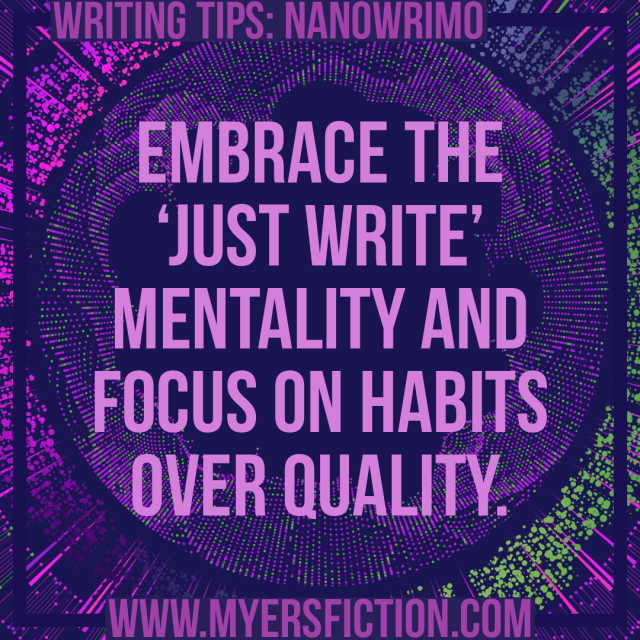
Everyone has a different writing process, but I think it’s fair for everyone to try and embrace the “Just Write” mindset. The “Just Write” mindset focuses on just getting words on the page. Don’t worry about the quality, as this event is more of a quantity and habit building event. Getting your ass in the chair and writing is the just write mentality.
You may run into moments where you feel overwhelmed or as if you can’t write another word. Some people call this writer’s block, others create their own name for it, and some say it doesn’t even exist. Writing is hard, and you’re going to hit some points where you may need to use a tactic to continue writing. Here are some ideas.
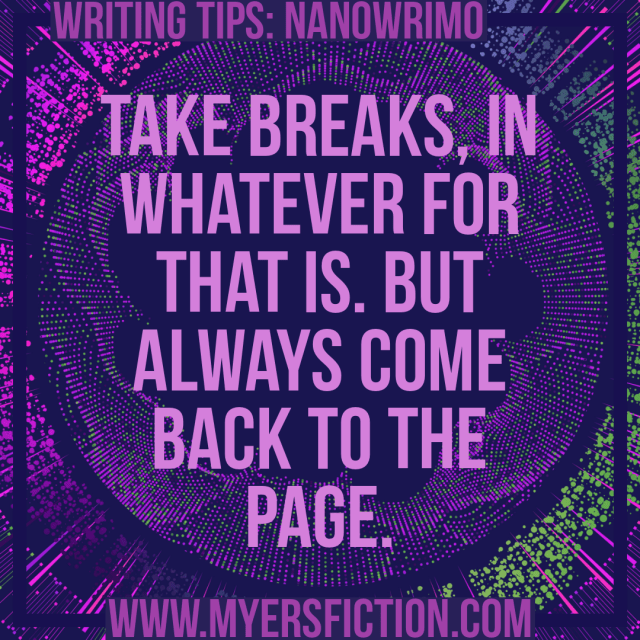
- Take a walk. Get out of your writing space for a moment and walk around. Sometimes your eyes and mind just need a break from writing and focusing on something else for a moment is a great way to reset your mentality. You can step away for minutes or hours, but make sure you go back to finish your writing session.
- Break up your writing session into sprints. You can do this by time or words. Set a goal to write for 15 minutes without distraction and see how many words you can get. Or set a word count goal and don’t be surprised if you end up writing more than you expected before you take a break.
- Talk it out. If you’re finding a certain scene, then talk it out with someone. You don’t need them to tell you the answer, but sometimes we let overthinking get in the way. Talk to another person, a pet, or even a plant. Whatever you do, get the words out of your head and into the air and you might find some good material in the end.
Once again, the NaNoWriMo goal is consistency. Even if you set a goal to write 100 words each day, you’re teaching your mind consistency. Or you can say I will write (x) words three days a week. Everyone’s schedule and life is different. To keep up with your goal find a friend or family member to keep you accountable. I’ve even seen people use social media to keep them accountable. As I will often and hopefully always say, find the way that works best for you.
Conclusion
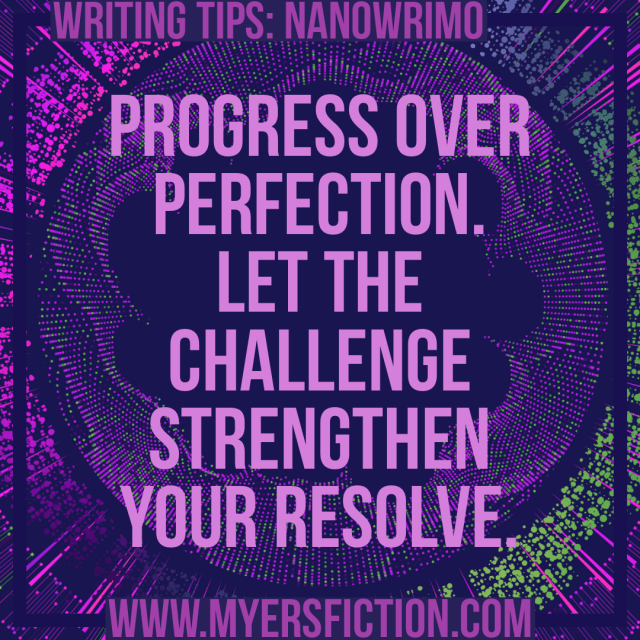
The National Novel Writing Month challenge is an exciting opportunity for writers to push themselves and build strong writing habits. While achieving 50,000 words in 30 days may seem daunting, focusing on consistency and removing distractions can set you up for success. Embrace the “Just Write” mentality to push through any blocks. Stay accountable, take breaks when needed, and remember to adjust your goals based on your unique situation. Whether you reach 50K or not, completing NaNoWriMo will teach you a lot about your writing process. Focus on progress over perfection, and let this challenge strengthen your skills and commitment. You’ve got this, my nugs!
Previous Post: Unveiling the Intrigue: Utilizing Conflicts of Interest in Fiction Writing
Next Post: November Newsletter
Next Writing Post: Using Symbols in Fiction
Discover more from Kenneth W. Myers
Subscribe to get the latest posts sent to your email.
 Kenneth W. Myers
Pingback: Unveiling the Intrigue: Utilizing Conflicts of Interest in Fiction Writing – Myers Fiction
Pingback: Using Symbols in Fiction – Myers Fiction
Pingback: Myers Fiction Newsletter: November 2023 – Myers Fiction